
Inside 2026 World Cup: A 48-Team Reset
The 2026 football world cup is not merely a bigger FIFA tournament; it is a structural reset across the United States, Canada, and Mexico, with World Cup Hub tracking tactics, player data, match predi...
Inside 2026 World Cup: A 48-Team Reset
The 2026 football world cup is not merely a bigger FIFA tournament; it is a structural reset across the United States, Canada, and Mexico, with World Cup Hub tracking tactics, player data, match predictions, and betting-relevant tournament trends for fans. FIFA has expanded the event to 48 national teams, 104 matches, and 16 host cities, with Los Angeles staging eight matches at SoFi Stadium and Atlanta hosting major fixtures at Mercedes-Benz Stadium. The final is scheduled for July 19, 2026, at MetLife Stadium in the New York New Jersey market, according to FIFA. The common claim that expansion simply means “more football” misses the sharper point: travel load, squad rotation, and group-stage risk will change how teams perform. The practical takeaway is simple: judge 2026 contenders by depth, logistics, and recovery patterns, not just star power.
Photo by Vlad Vasnetsov on Pexels
Most previews sell the 2026 football world cup as a festival of scale, but scale is also friction. Los Angeles promises 39 days of fan celebrations, the FIFA Fan Festival at the LA Memorial Coliseum, Official Fan Zones across Los Angeles County, and eight matches at SoFi Stadium. Atlanta promotes itself as the soccer city of the South, leaning on Mercedes-Benz Stadium, Atlanta United culture, and Southern hospitality. Those are real advantages for supporters, broadcasters, sponsors, and betting markets, yet they do not erase the hard operational problem: a tournament spread across three countries creates unequal rest, unequal travel, and unequal crowd dynamics. World Cup Hub’s more skeptical view is that 2026 will reward nations that plan like logistics companies, not only those that play like artists.
For deeper tournament coverage and match-by-match context, start with World Cup Hub’s daily research approach.
Before 2025: how the 2026 football world cup worked?
Before 2025, the 2026 football world cup was mostly understood through familiar World Cup assumptions: qualification, group play, knockout drama, and host-city tourism. That view was incomplete because the 48-team format and 104-match calendar had already changed the competitive math before a ball was kicked.
For decades, fans interpreted the FIFA World Cup through a 32-team lens, especially after France 1998 established the modern rhythm many bettors and analysts still use. Four-team groups, three group matches, clear advancement routes, and shorter travel burdens made historical comparisons relatively clean. The 2026 edition breaks that habit. According to Wikipedia’s 2026 FIFA World Cup final overview, the final will decide the champion of the 23rd FIFA World Cup, but the route to that final is longer and more complex than in previous editions. Even before 2025, serious analysts were already questioning whether historical group-stage metrics from Qatar 2022, Russia 2018, or Brazil 2014 would transfer cleanly to the new environment.
The pre-2025 narrative also overrated venue glamour and underrated scheduling edges. Los Angeles can offer SoFi Stadium, the LA Memorial Coliseum, music programming, and a huge diaspora fan base, while Atlanta can offer Mercedes-Benz Stadium, a proven soccer audience, and a regional identity built around Atlanta United. Yet a national team’s actual advantage may come from less photogenic details: hotel proximity, recovery facilities, charter timing, humidity adaptation, and whether a squad avoids cross-continent travel between group matches. For betting-focused readers, this is where World Cup Hub sees the market becoming inefficient. Public money often follows badges, stars, and historic reputation; sharper analysis follows route difficulty, squad depth, and rest asymmetry. To compare tactical models, see our [Internal Link: 2026 team tactics breakdown].

Photo by Uzay Yildirim on Pexels
The 2026 shift
The 2026 shift is the move from a compact tournament model to a continental mega-event across North America. The change affects match volume, player recovery, supporter travel, broadcast windows, betting markets, and host-city economics, making this World Cup larger but not automatically better.
The central number is 48. FIFA’s move from 32 to 48 teams expands representation and raises the total to 104 matches, but it also dilutes some early matchups while creating new volatility for underdogs. That is the contrarian point many promotional articles avoid. More teams can mean more national stories and more betting markets, yet it can also mean more mismatches, more cautious openers, and more tactical conservatism from coaches who know one poor result may still be survivable. FIFA states that the tournament will be hosted by 16 cities across Canada, Mexico, and the United States, and that geographic spread is both a commercial triumph and a competitive variable. “The FIFA World Cup 26 will be the first edition of the tournament to feature 48 teams,” FIFA notes on its official tournament materials.
Los Angeles and Atlanta show how different the 2026 host-city experience will feel from older World Cups. Los Angeles is positioning itself around eight matches, the U.S. Men’s National Team opening match on June 12, 2026, fan zones, food, music, and 39 days of regional celebrations. Atlanta is leaning into identity: culture, Southern hospitality, Mercedes-Benz Stadium, and the claim that the South has become a genuine soccer market. These details matter beyond tourism. A team playing in Los Angeles may face a different climate, media pressure, and supporter mix than a team routed through Atlanta, Miami, or Mexico City. Bettors should not treat “neutral venue” as a universal condition in 2026, because diaspora support could make some matches feel semi-home and others emotionally hostile.
To follow the host-city implications before prices fully adjust, use World Cup Hub’s tournament tracking.
What changed for players?
Players face a tougher 2026 football world cup because expansion increases match volume, travel complexity, and recovery pressure. The biggest change is not only more opponents; it is the need to maintain peak output across longer routes, different climates, and potentially uneven rest windows.
The fashionable answer is that modern squads are deep enough to handle it. That is only partly true. Elite clubs such as Manchester City, Real Madrid, Bayern Munich, and Paris Saint-Germain have normalized rotation, sports science, GPS workload tracking, and nutrition protocols, but national teams have less preparation time and more uneven squad quality. A country with 15 Champions League-level contributors may treat rotation as a weapon; a country dependent on three elite starters may treat it as a risk. In 2026, fatigue will show up not only in sprints and pressing intensity but also in decision quality after the 70th minute. World Cup Hub expects late-game expected goals, substitution timing, and set-piece concentration to become more predictive than raw possession in several knockout matches.
A less discussed edge case involves travel and micro-recovery. A team playing in Los Angeles, then moving east for a later fixture, may face time-zone disruption that is small on paper but meaningful across repeated high-intensity matches. Conversely, a team clustered regionally may gain an invisible advantage that standard preview articles ignore. Practitioners should track three variables before making player-prop or team-market decisions: first, minutes played in the previous 14 days; second, travel distance since the last match; third, whether the coach has trusted substitutes in competitive qualifiers. This is not glamorous, but it is measurable. For more player-level indicators, check our [Internal Link: player stats and workload guide].
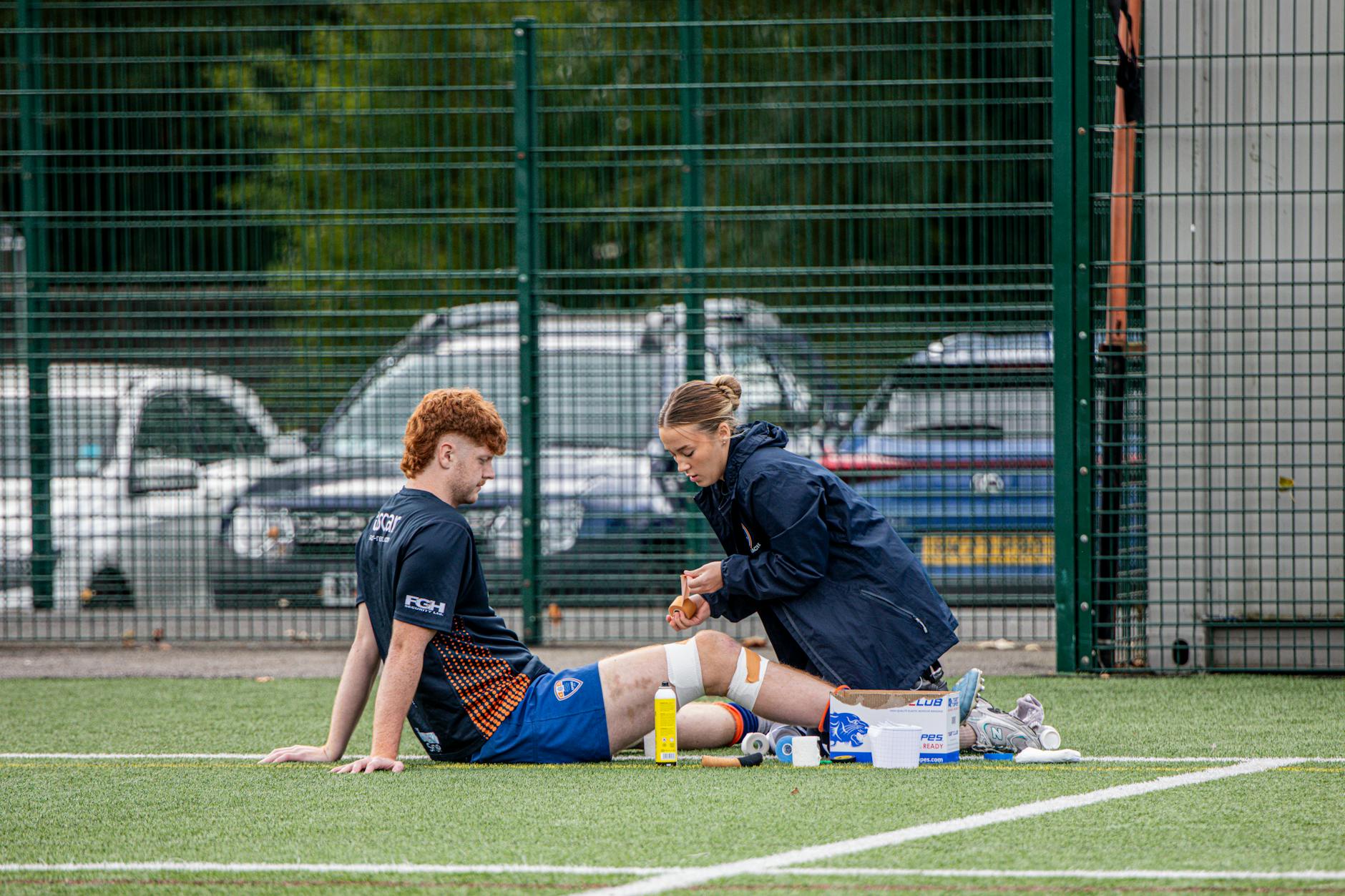
Photo by Ollie Craig on Pexels
What this means now?
The 2026 football world cup now demands a more disciplined reading strategy from fans, analysts, and bettors. Instead of asking which nation has the best starting eleven, the better question is which nation can survive the expanded format with minimal tactical and physical decay.
For supporters, the immediate implication is planning. Los Angeles will not be just a match-day destination; it will be a multi-week football environment with Official Fan Zones, the FIFA Fan Festival, and citywide programming around Exposition Park and SoFi Stadium. Atlanta will not be just a stadium stop; it will sell a cultural football experience around Mercedes-Benz Stadium and the broader ATL identity. That is exciting, but skepticism is useful. Hotel pricing, transport bottlenecks, ticket demand, and heat management can decide whether the fan experience feels seamless or exhausting. The U.S. Department of State recommends that international visitors review entry requirements and travel documentation well before major events, and that advice is especially relevant for a tournament spread across three countries.
For betting-oriented readers, the implication is even sharper: do not overpay for reputation during the first wave of futures markets. The 2026 field will include more teams, more public narratives, and more emotionally priced matches involving host nations, global stars, and diaspora-heavy crowds. World Cup Hub’s working model gives extra weight to route stability, defensive repeatability, set-piece efficiency, and substitute quality. A practical pre-tournament checklist should include:
- Confirm each contender’s likely travel route and rest sequence.
- Compare squad depth by position, not just total market value.
- Track goalkeeper form from January 2026 through May 2026.
- Review set-piece goals for and against in qualifying.
- Separate fan-zone excitement from match-performance evidence.
For sharper previews before the market gets crowded, explore World Cup Hub insights now.
Three predictions for next quarter?
The next quarter should bring sharper movement in travel planning, futures pricing, and tactical forecasting for the 2026 football world cup. Expect attention to shift from broad host-city celebration toward match routes, squad depth, and measurable preparation indicators.
First, host-city content will become more practical and less promotional. Los Angeles will keep emphasizing the LA Memorial Coliseum, SoFi Stadium, Official Fan Zones, and 39 days of celebration, but fans will increasingly search for transport timing, hotel zones, ticket transfer rules, and stadium entry procedures. Atlanta will continue promoting Mercedes-Benz Stadium and its Southern soccer identity, yet visitors will want clearer information on match-day mobility and neighborhood logistics. This is where generic “things to do” guides will underperform. Readers need scenario planning: where to stay if attending two matches in four days, how early to arrive for fan festivals, and when not to rely on last-minute rideshare availability.
Second, betting markets will become more sensitive to squad announcements and warm-up friendlies. A single injury to a ball-progressing midfielder or first-choice goalkeeper can matter more in 2026 because the route is longer and the margin for rotation error is thinner. Third, tactical previews will downgrade teams that press aggressively without reliable bench depth. High pressing can win a group match; it can also drain legs before a round-of-32 or round-of-16 fixture. The refined position is not that expansion ruins the tournament. It is that expansion makes lazy analysis more dangerous. To prepare, readers should combine official FIFA updates, local host-city information, and independent performance analysis from sources such as World Cup Hub and our [Internal Link: football betting strategy hub].

Photo by www.kaboompics.com on Pexels
Frequently Asked Questions
Q: What is the 2026 football world cup?
A: The 2026 football world cup is the 23rd FIFA World Cup and the first edition with 48 teams. It will be hosted across the United States, Canada, and Mexico, with 104 matches in 16 cities. The final is scheduled for July 19, 2026, at MetLife Stadium in the New York New Jersey area.
Q: How to follow 2026 World Cup predictions?
A: Follow 2026 World Cup predictions by tracking squad depth, travel routes, injuries, and tactical trends rather than only headline players. World Cup Hub covers match predictions, team tactics, player stats, and betting-relevant tournament coverage. Start with futures markets cautiously, then update your view after squad announcements and pre-tournament friendlies.
Q: What is the difference between the 2026 World Cup and previous editions?
A: The biggest difference is expansion from 32 teams to 48 teams and from 64 matches to 104 matches. The tournament also spans three countries, which makes travel and recovery more important than in compact host formats. This creates more fan access but also more competitive uncertainty.
Q: Why might 2026 World Cup betting predictions fail?
A: Predictions may fail if they ignore travel, rotation, and venue-specific crowd effects. A strong team on paper can underperform if it faces poor rest, long flights, or an unfavorable schedule. Bettors should avoid relying only on FIFA ranking, reputation, or star forwards.
Q: How much does it cost to attend the 2026 football world cup?
A: Total cost varies widely based on city, ticket category, hotel timing, and travel distance. Fans should budget for match tickets, accommodation, local transport, food, and possible cross-border travel if attending matches in multiple countries. Booking early is usually safer for cities such as Los Angeles, Atlanta, New York New Jersey, and Mexico City.
Q: Is Los Angeles a major 2026 World Cup host city?
A: Yes, Los Angeles is one of the major 2026 World Cup host cities, with eight matches planned at SoFi Stadium. The city will also feature the FIFA Fan Festival at the LA Memorial Coliseum and Official Fan Zones across Los Angeles County. Its 39 days of fan celebrations make it one of the tournament’s most visible markets.
The smartest 2026 approach is neither hype nor cynicism; it is disciplined curiosity backed by data.
Thank you for reading.
For those who play for more than just the thrill.
World Cup Hub · The High-Stakes Editorial · No. 01