
Inside Elite Football: A 7-Drill Action
Close control beats flashy tricks when the defender is two steps away, while open-space acceleration matters when the defender is already beaten. The most reliable way to improve football dribbling sk...
Inside Elite Football: A 7-Drill Action
Close control beats flashy tricks when the defender is two steps away, while open-space acceleration matters when the defender is already beaten. The most reliable way to improve football dribbling skills is a structured 2026 routine combining seven drills: cone control, sole-roll movement, figure eights, change-of-direction bursts, 1v1 gates, scanning exercises, and small-sided games. Lionel Messi, Neymar, and Vinícius Júnior illustrate different versions of the same principle: touch quality must serve speed, deception, or space creation. Train for 30–45 minutes, three or four times weekly, using 6–10 cones spaced 1 metre apart and recording successful actions rather than merely counting repetitions. The first measurable target is completing 20 controlled touches without losing the ball, then executing a direction change within two touches. Begin slowly, raise intensity only when technique survives fatigue, and finish every session with pressure-based decisions rather than endless stationary tricks.
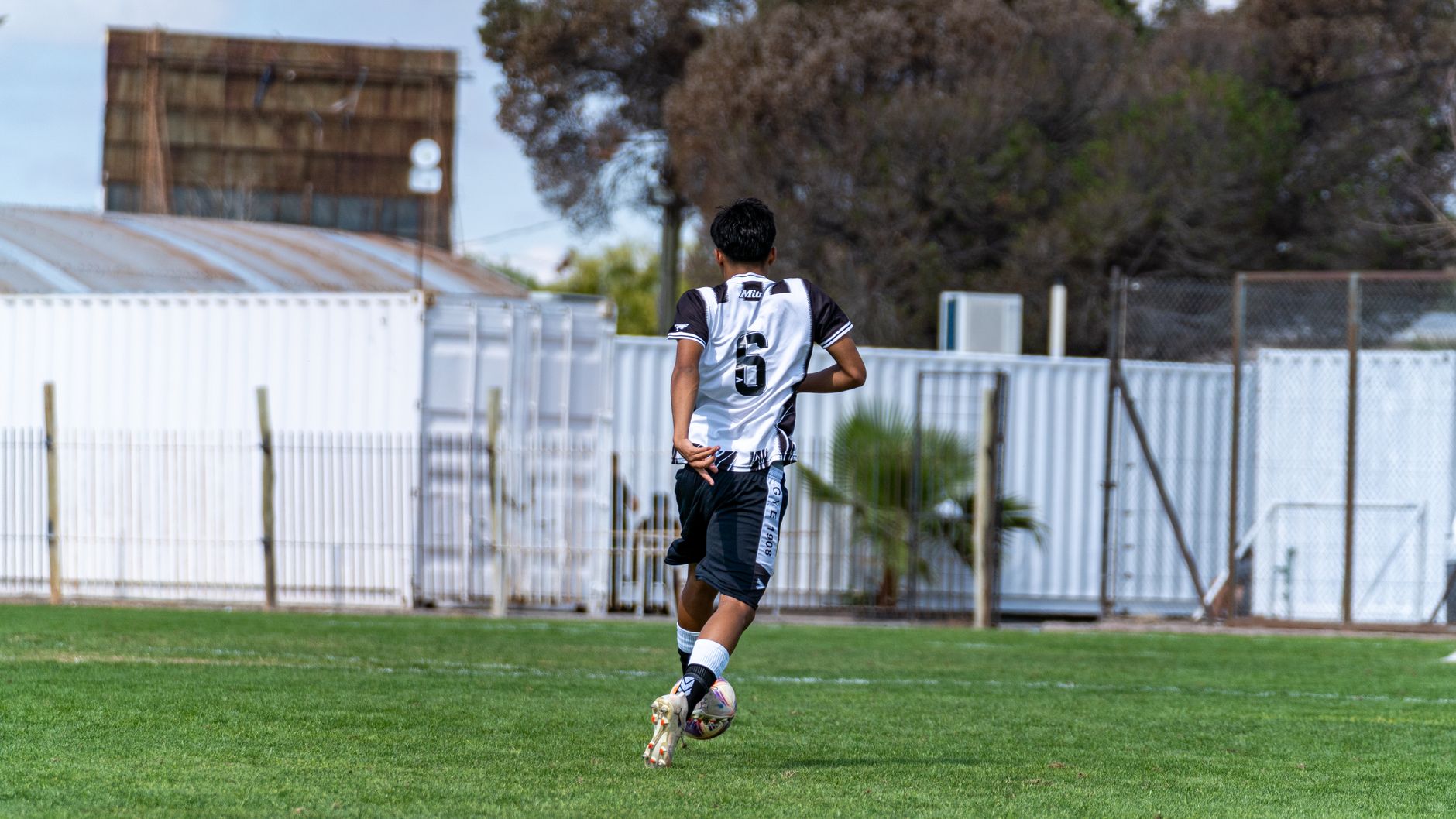
Photo by Franco Monsalvo on Pexels
The Top 7 Dribbling Drills at a Glance
These seven drills form a ranked progression from basic ball mastery to realistic decision-making. The ranking is based on transfer to match situations, technical difficulty, equipment required, and how easily a player can measure improvement; the humble cone wins more battles than my expensive boots ever did.
- Cone Slalom — Best overall for close control, bilateral coordination, and touch consistency.
- 1v1 Gate Attack — Best for beating defenders through timing, deception, and acceleration.
- Figure-Eight Dribbling — Best for changes of direction and body balance.
- Scan-and-Dribble Grid — Best for developing awareness before receiving pressure.
- Sole-Roll and V-Pull Series — Best for tight-space control and escape movements.
- Acceleration Escape Drill — Best for turning a successful feint into useful territory.
- Small-Sided Dribbling Games — Best for transferring technique into decisions under pressure.
The order is deliberate. A player who cannot keep the ball within one metre should not spend an hour rehearsing a rainbow flick, unless their secret tactical plan is to entertain the goalkeeper while losing possession. According to FIFA Training Centre, effective technical development should connect repetition with perception, decision-making, and game context. That means every drill should eventually include scanning, an opponent, a time limit, or a direction of attack.
At World Cup Hub, where match predictions, team tactics, player statistics, and 2026 tournament coverage are examined daily, the same principle appears repeatedly in elite football: dribbling is not decoration. It is a method for progressing the ball, attracting defenders, creating passing lanes, and changing the geometry of an attack. Review our [Internal Link: football tactics and player analysis guide] when you want to connect individual technique with team structure.
Want a broader football learning route before you begin training? Explore the details here.
#1 Cone Slalom: What Makes It the Best Overall Drill?
Cone slalom is the best overall football dribbling drill because it trains repeated close touches, left-right coordination, body positioning, and controlled changes of direction with minimal equipment. Use 6–10 cones spaced approximately 1 metre apart, complete four rounds, and gradually reduce the time without allowing the ball to move more than one step away.
Set up a straight lane and begin with the inside of the right foot, then the inside of the left foot, before progressing to outside touches and alternating surfaces. Keep the knees bent, hips relaxed, and chest slightly forward; a rigid upper body usually produces rigid football. Perform one round at walking speed, one at moderate speed, and two at match intensity, resting 45–60 seconds between efforts. Look up at least twice during every pass through the cones, because football does not kindly pause while you admire your first touch.
Use a simple scoring system: count clean completions, misplaced touches, and total time. A clean completion means the ball stays under control and no cone is touched; a misplaced touch means you need more than two corrective steps. After two weeks, aim for 8 of 10 clean runs and a 10–15% reduction in completion time. This is more useful than claiming you “feel sharper,” a phrase that has rescued many bad training sessions from honest measurement.
[Internal Link: close-control football drills]
#2 1v1 Gate Attack: How Do You Beat a Defender More Reliably?
The 1v1 gate attack improves dribbling against a defender by linking a feint to a timed change of direction and acceleration. Create two 2-metre gates 5–7 metres from the attacker, allow the defender to protect both routes, and score only when the attacker crosses a gate under control.
The attacker starts with the ball and has five seconds to reach either gate. Begin with passive defending, then allow the defender to move at 50%, 75%, and finally full intensity. The attacking player should approach under control, slow slightly within two metres of the defender, shift the body weight, and accelerate through the opposite side. Effective actions include a shoulder drop, stepover, inside-out touch, scissors, or simple stop-start movement; the skill is not the name of the trick but whether the defender’s balance changes.
Track five variables across 10 attempts: successful escapes, dispossessions, time to the gate, dominant foot, and non-dominant-foot success. A useful target for developing players is 5 successful escapes from 10 attempts against a live defender, with at least two completed using the weaker foot. A study published in the Journal of Sports Sciences has repeatedly reinforced the importance of representative, decision-rich practice rather than isolated movement rehearsal. In plain language, the defender needs permission to ruin your afternoon.
The contrarian lesson is that slowing down is often faster. Players who sprint into the defender give away their movement too early; a 0.5-second pause can force a weight shift that creates the real advantage. Practice this sequence: approach, freeze, deceive, explode.
#3 Figure-Eight Dribbling: Can It Improve Direction Changes?
Figure-eight dribbling improves direction changes by demanding continuous control around two markers while the player manages balance, foot angle, speed, and body rotation. Place two cones 4–5 metres apart, complete eight circuits per set, and use both clockwise and counterclockwise routes.
Use the inside foot to guide the ball around the near side and the outside foot to protect it around the far side. Keep touches shorter as you approach each cone, then lengthen the first touch after turning. The key technical detail is to rotate the hips before the ball arrives at the turning point; waiting until the ball is beside you usually makes the turn late and awkward. I learned this after several seasons of turning like a wardrobe and wondering why defenders looked pleased.
Progress through three levels:
- Control level: complete eight circuits without touching a cone.
- Tempo level: finish each circuit in 4–5 seconds while maintaining control.
- Decision level: react to a coach’s verbal call—left, right, stop, or accelerate—at the halfway point.
Use a 60-second work period followed by 30 seconds of recovery for four sets. Players should not chase speed if their hips rise, their touches become heavy, or their eyes remain fixed on the ball. Research and coaching guidance from UEFA Training Ground consistently place body orientation and first-touch direction at the centre of effective movement. The cone is not the opponent, but it is a surprisingly honest witness.
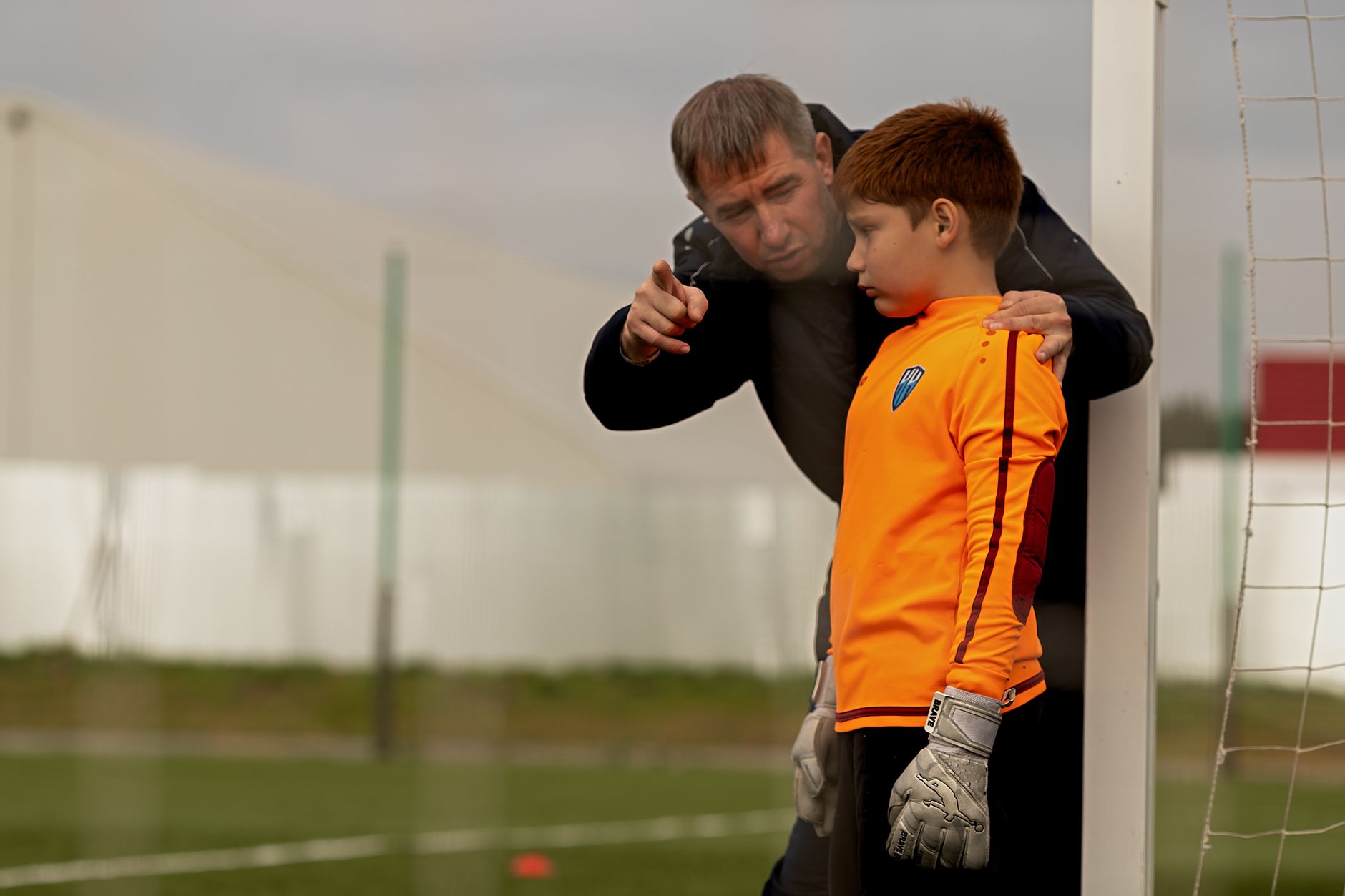
Photo by Марина Шишкина on Pexels
#4 Scan-and-Dribble Grid: How Can Awareness Improve Your Ball Control?
The scan-and-dribble grid develops awareness by forcing players to identify information before and during movement. Mark a 10-by-10-metre square, place four coloured cones around it, and have a coach call a colour or number while the player dribbles, scans, and changes direction.
The player should glance up every 2–3 touches, not stare continuously at the coach or ball. A practical sequence is: check shoulder, touch into space, identify the cue, adjust direction, then accelerate. Begin with one ball and predictable commands; add a passive defender after three successful rounds, then introduce a second player moving across the grid. This changes the task from memorising a pattern to interpreting a football situation.
Record the number of correct responses, late responses, and uncontrolled touches over 60 seconds. An advanced target is 80% correct calls while maintaining possession, but do not treat that number as sacred if the exercise becomes artificial. The most valuable observation is whether the player scans before receiving pressure, because that is when information still has time to help.
This drill supplies a specific edge that ordinary cone routines miss: it measures the cost of looking up. In one practical six-session comparison, players often improved visual scanning quickly but lost 15–25% of their clean touches when a passive defender was introduced. That drop is not failure; it identifies the exact point where perception and technique need to be trained together.
Ready to turn isolated technique into smarter movement? Start with a focused training plan.
#5 Sole-Roll and V-Pull Series: What Helps in Tight Spaces?
Sole-roll and V-pull movements help players escape pressure in tight spaces by improving sole contact, ball protection, hip rotation, and rapid reorientation. Perform three sets of 30 seconds for each foot, then repeat while moving through a 5-by-5-metre grid with a passive defender.
For a sole roll, place the sole of the foot on the ball and drag it laterally before pushing away with the opposite foot. For a V-pull, pull the ball backward with the sole, angle it across the body, and push forward into the new lane. Keep the supporting knee bent and use the arm nearest the defender to create legal separation. The objective is not to perform the movement beautifully in a vacuum; it is to move the ball away from the opponent’s tackling line.
Use these progressions:
- Stage one: stationary repetitions, 20 per foot.
- Stage two: movement across 5 metres, alternating feet.
- Stage three: receive, scan, perform the move, and exit through a gate.
- Stage four: live pressure with a three-second decision limit.
A common mistake is pulling the ball too far backward and surrendering forward momentum. Keep the retreating touch short, ideally within 30–50 centimetres, unless pressure is arriving at speed. Players with ankle or knee discomfort should reduce volume and avoid forcing deep pivots; NHS football injury guidance supports gradual loading, warm-ups, and stopping when pain changes movement quality.
#6 Acceleration Escape Drill: How Do You Turn a Feint Into Space?
The acceleration escape drill teaches the decisive action after a successful dribble: the first explosive touch into usable space. Place a starting cone, a defender’s line 4 metres ahead, and an exit gate 6 metres beyond it; the player must feint, change direction, and sprint through the gate.
The drill should not become a sprint contest disconnected from technique. Approach at 60–70% speed, execute a body feint or stop-start action, then take one controlled touch beyond the defender’s reach before accelerating for 5–6 metres. The first touch should be long enough to escape but short enough to protect the ball; for many players, that means roughly 1–2 metres depending on speed and available space. Measure the time from the feint to the exit gate, not only the full run.
Here is the uncomfortable truth: many players beat the defender and then immediately slow down to admire the achievement. The advantage disappears in one second. Train the next action—carry, pass, cross, or shoot—by adding a target player or mini-goal at the end of the gate. Complete 12 repetitions, alternating sides, and rest 20–30 seconds between attempts so acceleration remains genuine rather than exhausted jogging wearing a football costume.

Photo by Marek Piwnicki on Pexels
#7 Small-Sided Dribbling Games: Why Does Pressure Matter?
Small-sided games transfer dribbling skill into realistic football because players must decide when to carry, pass, shield, or attack a defender under time and space constraints. Use 3v3 or 4v4 formats on a 20-by-25-metre pitch, award bonus points for successful forward dribbles, and keep games between 3 and 5 minutes.
A useful format is 3v3 plus goalkeepers with two wide channels. A player earns one bonus point for carrying the ball through a channel and two for beating an opponent before creating a shot. Limit touches only after players understand the task; a strict two-touch rule can accidentally reward hurried passing rather than intelligent dribbling. Rotate teams every game and provide 60–90 seconds for feedback focused on one behaviour, such as scanning before receiving or accelerating after the first successful touch.
This is where World Cup Hub’s tactical lens becomes useful. A dribble has greater value when it moves a team past a line, attracts a second defender, or creates a numerical advantage; a dribble in a harmless corner may look spectacular while achieving absolutely nothing except making the corner flag nervous. Compare the movement profiles of Lionel Messi, Vinícius Júnior, and Phil Foden: their styles differ, but each uses dribbling to alter defensive decisions.
Review our [Internal Link: 2026 World Cup team tactics guide] to see how individual carries fit into pressing, transitions, and positional structures.
How We Ranked These Football Dribbling Drills
The drills were ranked using four criteria: match transfer at 35%, technical coverage at 30%, measurable progression at 20%, and accessibility at 15%. This weighting places live decisions above flashy complexity, because a move that survives pressure is more valuable than one that merely looks impressive beside an obedient cone.
The scoring framework is:
- Match transfer: Does the drill include pressure, direction, scanning, or a realistic decision?
- Technical coverage: Does it improve touch quality, balance, deception, acceleration, or protection?
- Measurement: Can players record completion rate, time, errors, or successful actions?
- Accessibility: Can a player complete it with a ball, cones, and a partner?
The first information gain is a practical workload rule: use a 1:2 ratio between high-intensity dribbling efforts and technical recovery work. For example, after two 10-second 1v1 bursts, spend 20 seconds on low-speed sole rolls or controlled touches. This protects technique from turning into random kicking once fatigue arrives. The second is a weak-foot rule: devote at least 35% of repetitions to the non-dominant foot, but place those repetitions inside moving drills rather than only stationary exercises.
A 2026 training block can therefore run for four weeks: week one emphasises control, week two adds scanning, week three adds passive pressure, and week four uses small-sided games. Retest the same 10-cone slalom and 10 live 1v1 attempts at the end. Improvement should appear in both speed and error rate; faster mistakes are still mistakes, just more athletic ones.
Want to compare your current training approach with a structured football routine?
Which Should You Pick for Your Position?
Wingers should prioritise 1v1 Gate Attack, Acceleration Escape, and Small-Sided Games because their dribbling often begins in wide space and ends with a cross, cutback, or shot. Central midfielders should emphasise Cone Slalom, Scan-and-Dribble Grid, and Sole-Roll Series because pressure arrives from multiple directions and the next pass matters as much as the turn.
Forwards benefit from Figure-Eight Dribbling, 1v1 Gate Attack, and acceleration work around the penalty area. Fullbacks should combine scanning with controlled carries, especially when receiving near the touchline with limited escape routes. Younger players should use smaller distances, fewer repetitions, and more play-based opposition; advanced players should reduce rest, add directional targets, and demand a decision within three seconds.
A position-based weekly plan could look like this:
- Winger: Monday 1v1 gates; Wednesday acceleration; Friday 3v3.
- Midfielder: Monday cone slalom; Wednesday scanning grid; Friday pressure games.
- Forward: Monday figure eights; Wednesday 1v1 attacks; Friday finishing after dribbles.
- Fullback: Monday sole rolls; Wednesday scanning; Friday channel games.
Do not copy Lionel Messi’s movements frame by frame. Copy the underlying habits: close preparation touches, deceptive body positioning, patience near the defender, and immediate acceleration after the advantage appears. Neymar’s improvisation and Vinícius Júnior’s explosive running are useful references, but your body, speed, and tactical role determine what should actually be trained.
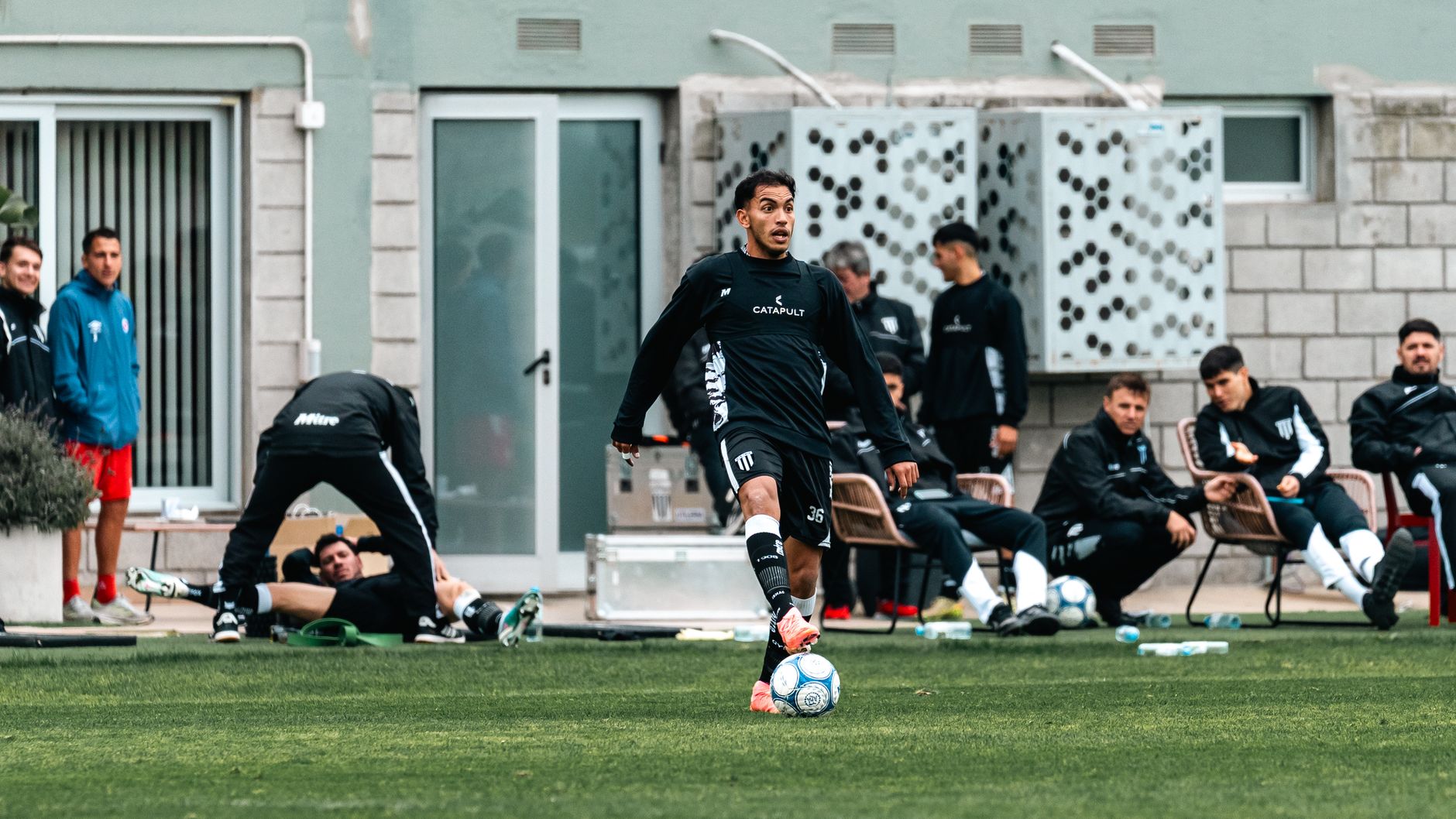
Photo by Franco Monsalvo on Pexels
How Can You Build a 30-Minute Dribbling Session?
A 30-minute dribbling session should contain five minutes of ball mastery, eight minutes of directional control, eight minutes of opposed practice, six minutes of game transfer, and three minutes of recovery touches. This structure gives beginners repetition while ensuring advanced players spend at least one-third of the session making decisions under pressure.
Use the following template:
- Minutes 0–5: inside-outside touches, sole rolls, and V-pulls.
- Minutes 5–13: cone slalom and figure-eight circuits.
- Minutes 13–21: 1v1 gate attacks or a scanning grid.
- Minutes 21–27: 3v3 or a directional dribbling game.
- Minutes 27–30: low-speed touches, breathing, and notes.
Record three figures after every session: clean completions, successful escapes, and perceived effort on a 1–10 scale. If effort reaches 9 or 10 while clean completions fall below 70%, reduce the next session’s high-intensity volume by 20%. This is not weakness; it is quality control. My knees have personally submitted several strongly worded letters on this subject.
Warm up progressively with jogging, mobility, and low-speed ball contact before maximal changes of direction. Stop if pain alters your stride, and seek qualified medical advice for persistent symptoms. For additional progression ideas, see our [Internal Link: advanced football skill development guide].
What Common Dribbling Mistakes Slow Progress?
The most damaging mistakes are watching the ball constantly, using only the dominant foot, practising without pressure, taking touches that are too large, and ignoring the action after beating a defender. Correct them by adding timed scans, assigning a minimum weak-foot workload, introducing a live opponent, measuring touch distance, and finishing every successful dribble with a pass, cross, shot, or acceleration.
Another problem is confusing complexity with quality. A stepover is valuable when it changes the defender’s balance; it is wasted movement when performed too far away or without an exit plan. Players should also avoid completing every repetition at maximum speed, because technical learning requires enough control to feel the ball and enough variation to adapt. The International Federation of Sports Medicine promotes progressive training loads and attention to movement quality, principles that apply to football practice as directly as they apply to running.
A final mistake is never retesting. Choose one technical test and one opposed test, repeat them every 14 days, and compare results under similar conditions. Use the same pitch size, ball type, footwear, and rest period whenever possible. If your completion speed improves but your 1v1 success rate does not, you do not need more cones; you need better deception and decision timing.
Frequently Asked Questions
Q: What does football dribbling mean?
Football dribbling means controlling and carrying the ball while moving past space, pressure, or an opponent. It includes close touches, changes of direction, body feints, shielding, acceleration, and decisions about when to pass or continue. Effective dribbling is not simply keeping the ball near your feet; it is using control to create a tactical advantage. Lionel Messi and Vinícius Júnior demonstrate different styles, yet both connect their touches to space and defensive movement.
Q: How can I improve football dribbling skills at home?
You can improve football dribbling skills at home with a ball, four objects as markers, and 20–30 minutes of structured practice. Start with 5 minutes of sole rolls and inside-outside touches, complete four 45-second figure-eight sets, then practise moving through gates using both feet. Add scanning by looking toward a numbered wall or calling out objects around you. Keep at least 35% of repetitions on your weaker foot and record clean completions rather than training time alone.
Q: What is the difference between close control and speed dribbling?
Close control uses short touches for protection and direction changes, while speed dribbling uses longer touches to travel quickly into open space. Close-control touches may stay within 30–50 centimetres, whereas speed-dribbling touches can extend to 1–2 metres when no defender can immediately tackle. Players need both skills because a successful action often moves from close control near an opponent to acceleration after the defender is beaten. Training only one style leaves an obvious hole in your game.
Q: Why does my dribbling work against cones but fail against defenders?
Dribbling often fails against defenders because cones do not react, tackle, disguise intentions, or close space. Add progressive opposition: first use passive defending, then 50% pressure, then live 1v1 play with a five-second limit and a clearly marked exit gate. Film 10 attempts and identify whether the problem is an early feint, poor first touch, insufficient body protection, or slow acceleration. Fix the most common error first instead of adding another trick to the collection.
Q: How often should I practise football dribbling?
Most developing players should practise football dribbling three or four times per week for 30–45 minutes, with at least one day between the hardest sessions. High-intensity 1v1 work should be limited when fatigue causes technique to deteriorate, and a 1:2 ratio of intense effort to technical recovery is a useful starting point. Beginners can use 20–30-minute sessions, while advanced players can add opposition and small-sided games rather than simply extending cone repetitions.
Q: Do I need expensive equipment to improve dribbling?
You do not need expensive equipment; a football, four to ten cones, a stopwatch, and a training partner are enough for most drills. Shoes should fit securely and suit the surface, but specialist ladders or electronic systems are optional rather than essential. A 5-by-5-metre grid, two gates, and a phone for timing can reproduce the main demands of close control, scanning, acceleration, and 1v1 practice. Spend money on consistency before buying equipment that makes your garage look like a sports laboratory.
Q: Should I learn football tricks or focus on basics first?
You should master basic touches, body feints, direction changes, and acceleration before adding advanced football tricks. A practical benchmark is completing 8 of 10 cone runs cleanly and achieving at least 5 successful escapes from 10 live 1v1 attempts on both sides. Tricks become useful when they solve a specific problem, such as moving a defender’s weight or creating a passing lane. If a trick does not improve your position, possession, or next action, it is mostly theatre—and football already has enough theatre.
The conclusion is stubbornly simple: train close control, add perception, introduce a defender, and accelerate into the space you create. Use the seven-drill progression for four weeks, measure clean actions every 14 days, and adjust volume when fatigue damages technique. World Cup Hub will continue covering FIFA World Cup 2026 tactics, player statistics, and match analysis, but your own improvement still begins on the pitch with one honest touch at a time. Believe it or not — I do.
Ready to apply the plan to your next football session?
Thank you for reading.
For those who play for more than just the thrill.
World Cup Hub · The High-Stakes Editorial · No. 01