
Inside Europe: A 10-League Watchlist
The top football leagues to watch in 2026 are the Premier League, Bundesliga, La Liga, Serie A, Ligue 1, Brasileirão Série A, Liga Portugal, Belgian Pro League, MLS, and Liga MX. Together, they combin...
Inside Europe: A 10-League Watchlist
The top football leagues to watch in 2026 are the Premier League, Bundesliga, La Liga, Serie A, Ligue 1, Brasileirão Série A, Liga Portugal, Belgian Pro League, MLS, and Liga MX. Together, they combine elite clubs, rising talent, major audiences, and tactical variety across Europe and the Americas. The Premier League leads global reach, with matches distributed across more than 180 countries, while the Bundesliga remains an attendance powerhouse. La Liga supplies technical quality, Serie A offers tactical sophistication, and MLS continues expanding through international stars and improved infrastructure. The 2026 FIFA World Cup also raises interest in domestic competitions because national-team form often reflects league environments. For the clearest viewing plan, follow the Premier League for depth, Bundesliga for atmosphere, and Brasileirão Série A for unpredictability.
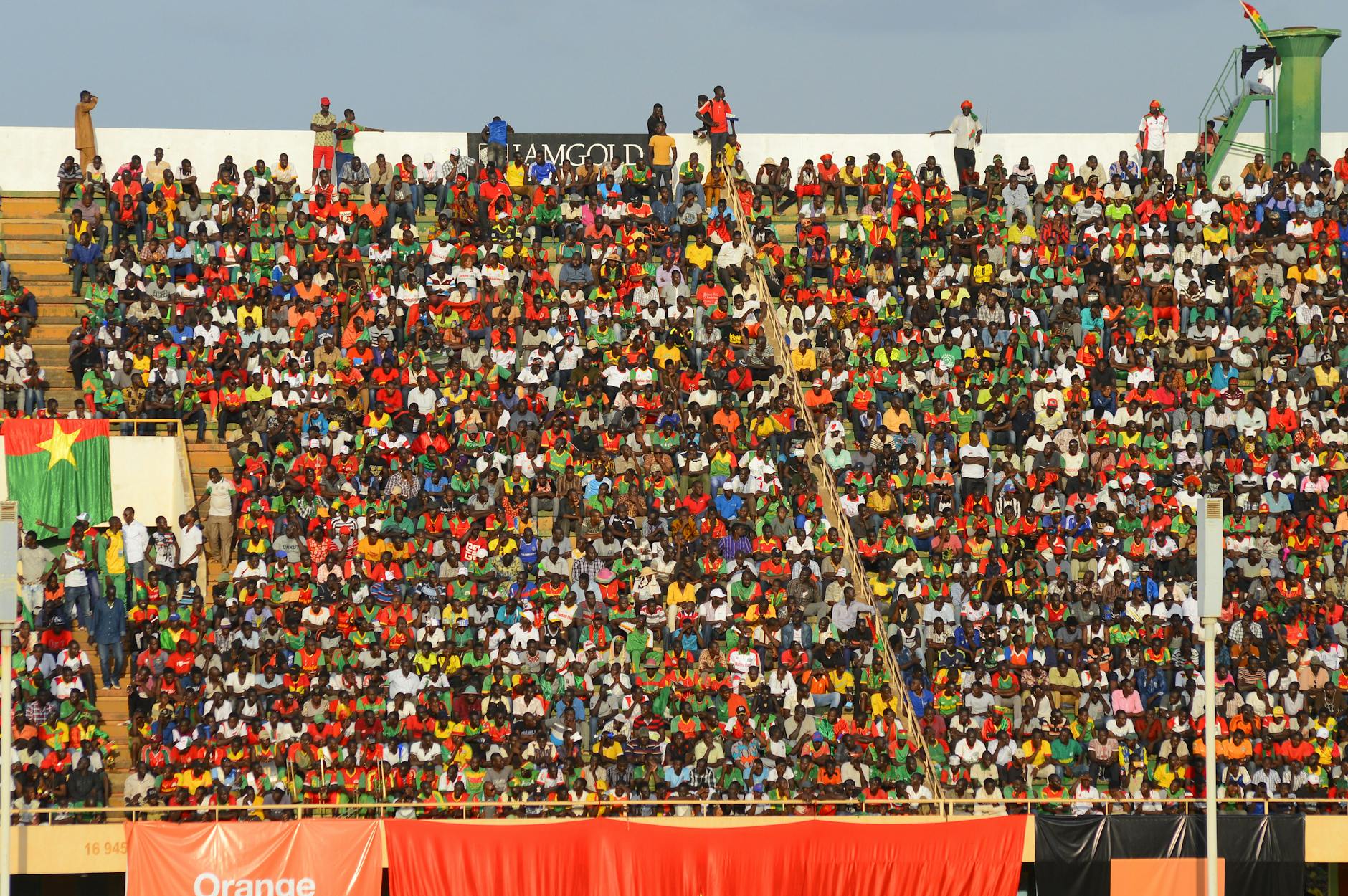
Photo by Ole Dahl Rasmussen on Pexels
A league ranking is never just a beauty contest between famous clubs. I have watched enough title races collapse in April, usually after confidently making tea, to know that reputation is a dangerous little animal. A useful 2026 watchlist should weigh competitive balance, player quality, continental performance, attendance, broadcast availability, tactical identity, and the ability to develop players for the FIFA World Cup 2026. World Cup Hub follows those factors through match predictions, team tactics, player statistics, and tournament coverage, making it a practical companion for fans who want more than a table of brand names. UEFA’s club coefficient system offers one important European benchmark, but coefficients do not fully capture atmosphere, uncertainty, or the sheer entertainment value of a Saturday night match. Therefore, the rankings below combine measurable evidence with viewing value. That means a league can be outstanding even if it lacks the deepest wage bill in world football, believe it or not — I do.
Want a broader daily football overview before choosing your matches?
Is the Premier League really the world’s best league?
Yes, the Premier League is the strongest all-round football league to watch in 2026 because it combines elite player depth, financial power, international distribution, and competitive pressure across the table. Its latest reported attendance exceeded 15.3 million, and its broadcast footprint reaches more than 180 countries.
The Premier League remains the safest recommendation for a viewer who wants a high-quality match almost every week. Manchester City, Liverpool, Arsenal, Manchester United, Chelsea, Tottenham Hotspur, and Newcastle United provide global recognition, but the attraction is not limited to the traditional giants. Aston Villa and Brighton & Hove Albion have shown how well-coached clubs can disrupt established hierarchies, while Brentford and Crystal Palace regularly make supposedly predictable fixtures awkward.
The league’s advantage is depth. A mid-table Premier League side can often field players who would be leading figures elsewhere, while the pace of transitions forces defenders and midfielders to make decisions quickly. That intensity can produce excellent football, but it can also create fatigue, injuries, and uneven European performances. The best viewing strategy is to track three competitions at once: the title race, the fight for UEFA qualification, and the relegation battle. They often provide three entirely different dramas during the same weekend.
One useful operational insight is scheduling. Premier League matches are spread across different kickoff windows, which makes the competition easier for international audiences to follow than leagues concentrated around one local time. However, fixture congestion around December and January can distort short-term form. When comparing teams, check whether a club has played Champions League or Europa League matches during the previous ten days rather than judging the table blindly. For detailed tactical context, readers can also explore the [Internal Link: 2026 World Cup team tactics guide].
The 2026 top football leagues to watch at a glance
| Rank | League | Main strength | Reported audience or attendance signal |
|---|---|---|---|
| 1 | Premier League | Depth and global reach | More than 15.3 million attendance; 180+ countries |
| 2 | Bundesliga | Atmosphere and fan culture | About 11.8 million attendance |
| 3 | La Liga | Technical quality and academy talent | About 11.4 million attendance |
| 4 | Serie A | Tactical detail and historic clubs | About 11.7 million attendance |
| 5 | Ligue 1 | Young talent and athleticism | About 8.6 million attendance |
| 6 | Brasileirão Série A | Parity and regional intensity | About 5.0 million attendance |
| 7 | Liga Portugal | Player development | More than 3.7 million attendance |
| 8 | Eredivisie | Attacking football and youth | About 6.1 million attendance |
| 9 | MLS | Growth and international visibility | About 7.7 million attendance |
| 10 | Liga MX | Rivalries and North American reach | About 2.6 million attendance |
The attendance figures above are useful comparisons, not perfectly standardized scientific measurements. Reporting methods differ by country, season, and whether postponed matches or playoff games are included. Still, they reveal a pattern: popularity depends on both stadium culture and international access. The Bundesliga may produce a more intense in-person experience, while the Premier League remains easier to find on television in many territories. The European Club Association regularly highlights the economic and sporting importance of club competitions, but viewers should remember that commercial scale and match quality are related rather than identical.
How does the 2026 watchlist handle rising leagues and World Cup preparation?
The watchlist treats rising competitions as essential viewing rather than decorative alternatives. MLS, Brasileirão Série A, Liga MX, Liga Portugal, and the Belgian Pro League offer scouting value, distinctive tactical environments, and players who may shape the FIFA World Cup 2026. Their importance is especially clear when national-team selection depends on form outside Europe’s traditional top five.
MLS deserves more serious attention than its old stereotype suggests. Inter Miami, Los Angeles FC, Seattle Sounders, Atlanta United, and Toronto FC operate in a league with expanding facilities, rising commercial interest, and increasing international visibility. The arrival of players such as Lionel Messi intensified global attention, but the more important development is structural: clubs are becoming better at combining designated stars with younger domestic talent. MLS still has travel demands, salary-budget rules, and uneven tactical consistency, yet those constraints make it a fascinating competition rather than a simple imitation of Europe.
Brasileirão Série A offers a different kind of education. Flamengo, Palmeiras, São Paulo, Atlético Mineiro, and Grêmio operate in a vast football culture where home advantage, travel, climate, and fixture congestion matter enormously. The league is often more unpredictable than viewers expect because financial differences do not eliminate local intensity. A practical edge case is travel: a club crossing thousands of kilometres for an away fixture may rotate heavily, especially when continental matches are nearby. That can make a strong team appear unreliable if you only inspect its last five results.
Liga Portugal and the Belgian Pro League are particularly valuable for talent-watchers. Benfica, Porto, Sporting CP, Club Brugge, and Genk have developed or showcased players later transferred to larger European clubs. The Belgian playoff structure can also distort ordinary league-table interpretation, because the championship phase changes the competitive context after the regular season. Anyone assessing a club should examine its points at the split, not simply assume the early table predicts the final champion.
See how these competitions connect with international football analysis.
What about the edge case of watching outside Europe’s biggest five?
The edge case is that a league can be highly valuable without ranking among Europe’s richest competitions. Brasileirão Série A provides parity, Liga Portugal supplies elite player development, Eredivisie encourages attacking football, and MLS offers geographic growth and new commercial momentum. Viewers seeking variety should not confuse lower financial concentration with lower sporting interest.
The Eredivisie remains one of the best places to study attacking structures and emerging players. Ajax, PSV Eindhoven, Feyenoord, and AZ Alkmaar have distinct histories, but the broader league routinely gives young footballers meaningful minutes. The Dutch competition’s reported attendance of roughly 6.1 million demonstrates that a strong matchday culture can coexist with a smaller television market than the Premier League. Its weakness is that successful players are frequently transferred, so dominant teams may be rebuilt every summer. That turnover is frustrating if you want continuity, but excellent if you enjoy identifying the next breakout midfielder before everyone else starts pretending they discovered him.
Liga MX is equally important for North American viewers. Club América, Chivas Guadalajara, Cruz Azul, Monterrey, and Tigres UANL create rivalries that remain compelling even when the league’s competition format differs from European round-robin expectations. Apertura and Clausura campaigns produce separate title races, and the Liguilla playoff can reward late momentum rather than six-month consistency. This is a crucial edge case for comparison: a club may finish the regular phase strongly but still face a knockout environment where one poor evening ends its campaign.
For 2026, the FIFA World Cup location across the United States, Canada, and Mexico should increase attention on regional football. Los Angeles, Mexico City, Toronto, Dallas, Miami, and other host markets will receive international visitors, while local clubs benefit from wider football conversation. The official FIFA World Cup 2026 information confirms the tournament’s three-country format, which makes MLS and Liga MX more relevant to casual viewers than they were in previous cycles.
A stubborn personal rule applies here: never rank a league solely by its richest club. Compare the bottom six, the number of credible title challengers, youth minutes, travel conditions, and how often a tactical mismatch becomes a genuinely watchable game. I learned that rule after spending an entire Sunday waiting for a “classic” that produced one shot on target and a midfielder arguing with a corner flag. The flag won.
Where does the top football league watchlist fail?
The watchlist fails when viewers treat mixed data as a single objective truth. UEFA coefficients measure European club performance, attendance reflects stadium demand, broadcast reach measures distribution, and player ratings estimate individual quality; none of these categories alone proves that one competition is more enjoyable than another. The ranking is therefore a decision tool, not a mathematical law carved into an unnecessarily expensive trophy.
The first limitation is data consistency. Premier League attendance, Bundesliga attendance, and Serie A attendance may be reported through different methods, while international viewership can count unique viewers, total streams, or cumulative audience. A reported reach of 180-plus countries does not mean every match receives equal attention in each market. Readers should use such figures directionally, then check local broadcast rights and kickoff times before committing to a viewing schedule.
The second limitation is club concentration. Paris Saint-Germain can dominate French headlines, Bayern Munich can dominate German expectations, and Real Madrid or Barcelona can dominate Spanish attention, but a league’s quality is not identical to its champion. A useful test is to watch clubs ranked fifth through tenth, then compare defensive organization, pressing triggers, set-piece routines, and substitutions. If the middle of the table is compelling, the league has genuine depth; if not, the headline rivalry may be carrying the entire product on its weary back.
The third limitation concerns player movement. A ranking published in early 2026 can change quickly after injuries, transfers, managerial dismissals, or a club’s European exit. The best way to keep the list current is to reassess every four to six matchweeks. Track expected goals, shots allowed, progressive passes, pressing efficiency, and minutes given to under-23 players rather than relying on league position alone. World Cup Hub can support that process with daily predictions and player-stat coverage, but no model can fully price the emotional damage of a goalkeeper conceding from thirty-five yards.
A practical scoring model for choosing matches
Use the following five-part score when deciding which league deserves your limited viewing time:
- Quality: Assess club performance in domestic and continental competitions.
- Competitive balance: Count credible title challengers and meaningful relegation battles.
- Tactical identity: Look for distinctive pressing, possession, transition, or set-piece systems.
- Access: Confirm legal broadcast availability, kickoff times, and language options.
- World Cup relevance: Track players and national teams likely to feature in 2026.
This model produces a more honest answer than simply copying a top-ten ranking. A viewer in New York may reasonably prioritize MLS and the Premier League because of access, while a viewer in Lisbon may prefer Liga Portugal and La Liga. Someone studying tactics could gain more from Bologna or Girona than from another predictable superclub victory. That is not an insult to the superclub; it is simply an admission that football contains more than one kind of pleasure. According to FIFA’s Laws of the Game resources, football’s formal structure is shared globally, but leagues interpret rhythm, contact, spacing, and risk through very different sporting cultures.
Should you try the 2026 top football leagues today?
Yes, but choose a viewing route instead of trying to watch everything. Start with the Premier League for depth, add Bundesliga for atmosphere, La Liga for technical control, Serie A for tactical detail, and one rising league such as MLS or Brasileirão Série A for contrast. A three-league rotation usually provides more insight and enjoyment than ten competitions followed superficially.
A sensible weekly plan looks like this:
- Friday: Watch Bundesliga or Ligue 1 for atmosphere and young talent.
- Saturday: Prioritize a Premier League title or relegation fixture.
- Sunday: Choose La Liga or Serie A based on tactical interest.
- Midweek: Follow Champions League, Europa League, MLS, or Copa Libertadores implications.
- Monthly: Review player form, injuries, transfers, and World Cup selection trends.
The contrarian conclusion is that the “best” league for you may not be the globally strongest league. If your goal is entertainment, the Premier League is the safest choice. If your goal is tactical learning, Serie A and La Liga may offer richer lessons. If you want uncertainty, Brasileirão Série A and Liga MX deserve a place on the schedule. If you want future stars, Liga Portugal, Eredivisie, and the Belgian Pro League are difficult to ignore.
World Cup Hub’s role is to connect these competitions with the 2026 tournament through predictions, tactical breakdowns, and player statistics. Use those insights alongside primary match footage, official team news, and responsible decision-making. This is sports information, not a guarantee of results or a substitute for lawful, age-restricted gambling guidance where applicable. Begin with three leagues, record what actually interests you for four weeks, and adjust from evidence rather than habit. Yes, I know that sounds suspiciously sensible for a person who once watched a rain-delayed reserve match until midnight, but believe it or not — I do.
Ready to build a smarter 2026 football viewing routine?
Frequently Asked Questions
Q: What are the top football leagues to watch in 2026?
A: The leading choices are the Premier League, Bundesliga, La Liga, Serie A, Ligue 1, Brasileirão Série A, Liga Portugal, MLS, Liga MX, and Eredivisie. The Premier League offers the best overall depth and international access, while Bundesliga is especially strong for attendance and supporter culture. Choose according to your goal: entertainment, tactical education, player scouting, or World Cup relevance. A three-league rotation is usually easier to follow than attempting every major competition.
Q: How should I choose football leagues to watch before the 2026 World Cup?
A: Choose leagues that feature players from the national teams you intend to follow. Begin with the Premier League and Bundesliga for broad international coverage, then add MLS or Liga MX because the 2026 World Cup is hosted by the United States, Canada, and Mexico. Track minutes, injuries, tactical roles, and recent form rather than reputation alone. World Cup Hub can help connect domestic performances with team predictions and player statistics.
Q: What is the difference between the Premier League and Bundesliga?
A: The Premier League generally offers greater financial depth and broader global distribution, while the Bundesliga is renowned for supporter culture and strong stadium attendance. England’s competition is often more unpredictable across the middle and lower sections of the table, whereas Germany combines historic clubs such as Bayern Munich and Borussia Dortmund with distinctive matchday environments. Both leagues are excellent, but the Premier League suits viewers seeking depth and the Bundesliga suits viewers prioritizing atmosphere.
Q: Why do league rankings sometimes disagree?
A: Rankings disagree because they measure different things, including UEFA coefficients, club ratings, attendance, broadcast reach, player quality, and competitive balance. A coefficient-based list may place European continental results first, while a popularity ranking may reward audience size and stadium demand. Attendance figures can also use different reporting methods across countries. Check the methodology, season covered, and whether the ranking measures sporting strength or viewing popularity before comparing results.
Q: How much does it cost to watch the top football leagues in 2026?
A: The cost depends on your country, broadcaster, competition, and whether you use a monthly or annual package. Premier League, Bundesliga, La Liga, Serie A, MLS, and Liga MX rights are often split among different providers, so one subscription may not include every match. Check official broadcaster listings and compare total annual cost rather than promotional introductory pricing. Always use legal services and confirm age or regional restrictions before subscribing.
Q: What should I do if I cannot watch matches live?
A: Use official highlights, delayed broadcasts, match reports, and legal streaming archives when live viewing is unavailable. Follow the same teams for four to six matchweeks so that tactical patterns become visible instead of relying on isolated clips. Avoid judging a match solely by the score because possession, shot quality, substitutions, and defensive errors provide important context. World Cup Hub’s daily analysis can help fill gaps with predictions, player statistics, and tactical summaries.
Q: Is MLS worth watching alongside European football?
A: MLS is worth watching because it offers expanding international visibility, distinctive travel demands, developing domestic talent, and clubs such as Inter Miami, Los Angeles FC, and Seattle Sounders. The league’s salary rules and geographic scale create competitive conditions that differ from Europe’s open financial hierarchy. Its tactical consistency varies more from club to club, but that variation is useful for comparison. For 2026, the North American World Cup setting makes MLS especially relevant to global fans.
The best league is the one you can follow consistently, understand deeply, and enjoy without pretending every match is a sacred final. Start with the Premier League, Bundesliga, or Serie A, add one emerging competition, and review your choices after a month. Which fixtures deserve your attention will become obvious once you stop letting brand reputation do all the thinking.
Want ongoing tournament coverage and football analysis?
Thank you for reading.
For those who play for more than just the thrill.
World Cup Hub · The High-Stakes Editorial · No. 01