
2026 Best FPL Team: 5 Winning Edges
The best FPL team 2026 cannot be named responsibly before Fantasy Premier League prices, fixtures, promoted clubs, and player positions are officially confirmed by Premier League and Fantasy Premier L...
2026 Best FPL Team: 5 Winning Edges
The best FPL team 2026 cannot be named responsibly before Fantasy Premier League prices, fixtures, promoted clubs, and player positions are officially confirmed by Premier League and Fantasy Premier League sources. However, a strong early draft should usually reserve roughly 35–40% of the budget for premium attackers, prioritize nailed starters from Manchester City, Arsenal, Liverpool, and Chelsea, and keep at least £0.5m in flexibility when possible. The 2026 FIFA World Cup adds an unusual scheduling risk because international workloads, rotation, and late preseason returns may affect Premier League availability. World Cup Hub’s approach is to combine expected minutes, set pieces, fixture difficulty, and captaincy paths rather than chase last season’s points. Start with a two-week fixture map, select reliable starters first, and delay final transfers until official FPL news confirms prices, roles, and fitness.

Photo by Franco Monsalvo on Pexels
FPL managers love certainty. Unfortunately, football provides about as much certainty as a goalkeeper catching a wet cross in November. The 2026 season demands a flexible process because the official player list, prices, opening fixtures, and injury reports will determine whether an early draft is genuinely strong or merely attractive on paper.
World Cup Hub covers FIFA World Cup 2026 predictions, team tactics, player statistics, and tournament developments, but the same principle applies to FPL: separate evidence from noise. A famous name is not automatically a good fantasy asset, and a cheap midfielder is not a bargain if he plays 58 minutes every other week. Use this guide as a framework for building the best FPL team 2026, then verify every selection against official data before Gameweek 1.
Want a clearer starting framework before choosing players?
Step 1: Build the budget around reliable starters
A successful FPL squad begins with minutes, not glamour. Before considering player ownership or social-media hype, divide the £100.0m budget around a core of players expected to start regularly. The standard squad contains 15 players: two goalkeepers, five defenders, five midfielders, and three forwards. Your first draft should therefore avoid spending so heavily on four or five stars that the bench becomes decorative furniture.
The most useful early structure is usually one of three models:
- Balanced attack: two premium midfielders, one premium forward, and several mid-price starters.
- Premium captaincy: three expensive attackers with budget defenders and rotating midfielders.
- Flexible spread: no more than two premium players, allowing upgrades after fixture swings.
The right choice depends on the official 2026 pricing. A £6.0m midfielder who takes corners can be more valuable than a £7.5m forward competing with two teammates for shots. Expected minutes, penalty duties, set pieces, and team strength should be scored together. The Premier League official website remains the first place to verify club information, while Fantasy Premier League should be treated as the final authority for prices and positions once the game opens.
One practical edge is to leave a small cash reserve. Holding £0.5m can prevent a forced hit when a popular player rises in price, while spending every penny may leave you unable to respond. I learned that lesson after losing four points to “fix” a team I had broken myself. Believe it or not — I do.
Initial squad checklist
- Confirm every player’s club and FPL position.
- Identify likely starters rather than merely talented substitutes.
- Mark penalty takers, corner takers, and direct free-kick options.
- Keep at least one route to a premium captain.
- Avoid selecting more than two players whose starting roles remain unclear.
Step 2: How should you rank fixtures and captaincy?
The best FPL team 2026 should be built around captaincy opportunities, not only total points. A premium attacker with three strong home fixtures may outperform two cheaper players despite a higher purchase price because the captaincy multiplier doubles his score. Fixture strength should be assessed alongside opponent defensive style, expected minutes, and whether the player’s club has European or international commitments.
Use a rolling six-game view, but give the first three fixtures extra weight. A fixture ticker can identify attractive runs, yet it cannot explain tactical matchups. For example, a high defensive line may suit a fast forward, while a deep-block opponent may increase the value of a creative midfielder taking corners. FBref offers useful team and player performance data, including shooting, passing, and defensive statistics that help add context to fixture lists.
A practical captaincy table should include:
| Factor | What to check | Why it matters |
|---|---|---|
| Home or away | Venue and travel | Home advantage can affect attacking output |
| Opponent defence | Goals conceded and shots allowed | Measures chance quality |
| Player role | Penalties, corners, central position | Predicts involvement |
| Rotation risk | European and international schedule | Protects expected minutes |
| Alternative captain | At least one backup option | Reduces dependence on one match |
Do not captain a player solely because he is highly owned. Ownership protects rank when a popular player scores; it does not create points. The sharper question is whether the player has a secure role and multiple scoring routes.
At roughly one-third of the planning process, it helps to compare your captaincy routes with [Internal Link: 2026 Premier League fixture analysis] rather than relying on a single fixture-difficulty colour. Green squares have ruined many weekends. Mine included.
Get the latest planning resources before finalising your attacking structure.

Photo by Mario Spencer on Pexels
Step 3: Which player statistics matter most?
Expected minutes, expected goals, expected assists, shots in the box, big chances, and set-piece involvement are the most useful statistical foundations for the best FPL team 2026. Goals and assists still matter, naturally, but they are backward-looking outcomes. A midfielder with 0.55 expected goal involvement per 90 minutes and secure penalties may be more interesting than one who scored twice from three low-probability attempts.
For defenders, clean-sheet potential should not be the only criterion. Attacking defenders can gain points through assists, goals, bonus points, and occasional clean sheets, while a centre-back may be cheaper but dependent on a difficult-to-predict header. Goalkeepers should be judged through save volume, defensive structure, fixture rotation, and price. A goalkeeper facing 20 shots every weekend may collect saves but also concede repeatedly; fantasy football is not a loyalty programme for suffering.
Two information edges are often missed by casual managers. First, a player’s role can change after a transfer even when his listed position does not; a full-back pushed into midfield may gain attacking value without an immediate price adjustment. Second, set-piece responsibility is often more stable than small-sample goal totals, so corners and penalties can reveal future opportunity before points arrive.
Use a simple evidence hierarchy:
- Minutes security: starter, substitute, or rotation candidate.
- Role quality: central attacker, advanced full-back, set-piece taker, or defensive midfielder.
- Team context: possession, chance creation, defensive strength, and manager tactics.
- Fixture value: opponent quality over the next four to six matches.
- Price and ownership: important, but never a substitute for opportunity.
Consult [Internal Link: FPL player statistics and expected-goals guide] when comparing similar-priced options. Do not pretend the decimal points are sacred tablets; models are tools, not football gods.
Step 4: How can you manage World Cup and rotation risk?
The 2026 FIFA World Cup creates a scheduling layer that must be considered when building an FPL team. The tournament is scheduled across the United States, Canada, and Mexico, with major cities and long travel distances involved. Players reaching the latter stages may have shorter recovery periods before domestic football, while others may arrive late to preseason training or face managed minutes.
The FIFA World Cup 2026 official site should be monitored for tournament dates and competition information. Meanwhile, club-specific updates from Manchester City, Arsenal, Liverpool, Chelsea, Real Madrid, and Bayern Munich can help identify players returning later than expected. A player who misses preseason because of a deep tournament run is not automatically a bad pick, but he carries more early-season uncertainty than a rested teammate.
Track risk in three categories:
- Availability risk: injury, suspension, late return, or incomplete preseason.
- Rotation risk: Champions League involvement, squad depth, and congested fixtures.
- Role risk: new manager, transfer, formation change, or set-piece reassignment.
The operational tip is simple but valuable: check press-conference and training reports within 24 hours of every deadline, especially after international breaks. Early team news can change a supposedly safe 90-minute pick into a one-point cameo. I once ignored a “managed workload” warning and received one appearance, zero goals, and a personal lesson worth approximately four points. It was not a cheap lesson.
For deeper preparation, review [Internal Link: World Cup player workload and injury-risk analysis] before selecting several assets from one national team.

Photo by Pixabay on Pexels
Step 5: Verification before Gameweek 1
Verification is where a promising draft becomes a defensible one. At least 48 hours before the opening deadline, confirm every player’s club, position, price, injury status, starting probability, and set-piece role. Then check whether your substitutes can realistically cover a surprise benching. A £4.0m defender who does not play is not cheap; he is an expensive hole wearing football boots.
Use this final audit:
- Has the player started the latest competitive or preseason match?
- Is there credible manager evidence supporting his role?
- Does he have penalties, corners, or advanced positioning?
- Can the bench cover a late absence?
- Does the team have a strong opening fixture sequence?
- Is the captain supported by both role and matchup?
- Are you selecting him because of data or because everyone online shouted his name?
A contrarian but evidence-based rule is to avoid building around more than three players with unresolved role changes. New managers, transfers, and tactical experiments can produce exceptional value, but stacking uncertainty multiplies the chance of a poor opening. Wait for official FPL prices and reliable team news rather than publishing a “final” squad weeks before the game even tells us what players cost.
Troubleshooting common failures
Why does an early FPL draft fail?
An early FPL draft usually fails because it assumes prices, minutes, and tactical roles that have not been confirmed. The solution is to separate locked information from provisional information and revise the squad after official FPL data arrives. Avoid treating preseason goals, friendly lineups, or social-media rumours as conclusive evidence.
The most common problems are predictable:
- Too much money on the bench: downgrade one premium asset and improve starting depth.
- No captaincy route: replace a luxury pick with a premium attacker facing strong fixtures.
- Three rotation risks: move toward players with documented starting roles.
- Chasing last season’s points: compare current role, team, and minutes.
- Ignoring price changes: retain £0.5m when possible to preserve flexibility.
- Overusing early transfers: avoid taking hits unless the expected gain clearly exceeds four points.
If a player is flagged, check the club’s official update, the manager’s press conference, and the deadline time. Do not make a transfer merely because a yellow warning icon frightened you at breakfast. At the same time, do not ignore confirmed absences because a player “might magically recover.” Hope is a poor defensive midfielder.
When should you use the Wildcard?
The Wildcard should normally be saved until information creates a genuine structural advantage, such as a major fixture swing, multiple injuries, or a clear tactical shift. Using it immediately can be correct if the opening squad is fundamentally wrong, but the cost is losing a powerful response to future uncertainty. The 2026 calendar may make international breaks and fixture congestion especially important decision points.
Compare these signals before activating it:
- Four or more players have lost their starting roles.
- A new fixture run lasts at least five Gameweeks.
- Several popular assets are injured or suspended.
- Your squad lacks two reliable captaincy options.
- Price changes have created a large gap between your intended structure and current value.
World Cup Hub recommends recording every transfer reason in one sentence. If you cannot explain the move without saying “the algorithm felt weird,” wait 24 hours. That tiny habit prevents emotional rebuilding and makes performance review far more useful.
See the wider evidence before choosing your chips and transfer timing.
A practical best FPL team 2026 structure
Until official prices are released, a structure is more reliable than a named squad. The following template balances upside, flexibility, and defensive cover:
- Goalkeepers: one reliable starter plus one playing rotation option.
- Defenders: two attacking defenders, two dependable starters, and one budget player with a credible path to minutes.
- Midfielders: two premium captaincy candidates, two mid-price attackers, and one cheap starter or set-piece option.
- Forwards: one premium forward, one mid-price forward with secure minutes, and one budget forward who actually plays.
- Bench: prioritize minutes over theoretical upside; bench points do not help unless they enter.
The exact clubs and names should be selected only after FPL confirms the 2026 database. A Manchester City midfielder may look ideal until Pep Guardiola rotates him; an Arsenal defender may appear essential until a new signing changes the formation; a Liverpool forward may become a bargain or an avoid depending on penalty duties. This is why role verification beats reputation.
A final weekly process
- Review injury and suspension news.
- Check expected lineups from credible sources.
- Compare the next four fixtures.
- Identify your captain and vice-captain.
- Make transfers before the deadline, not during panic.
- Record the reason for each decision.
- Reassess after the deadline without rewriting history.
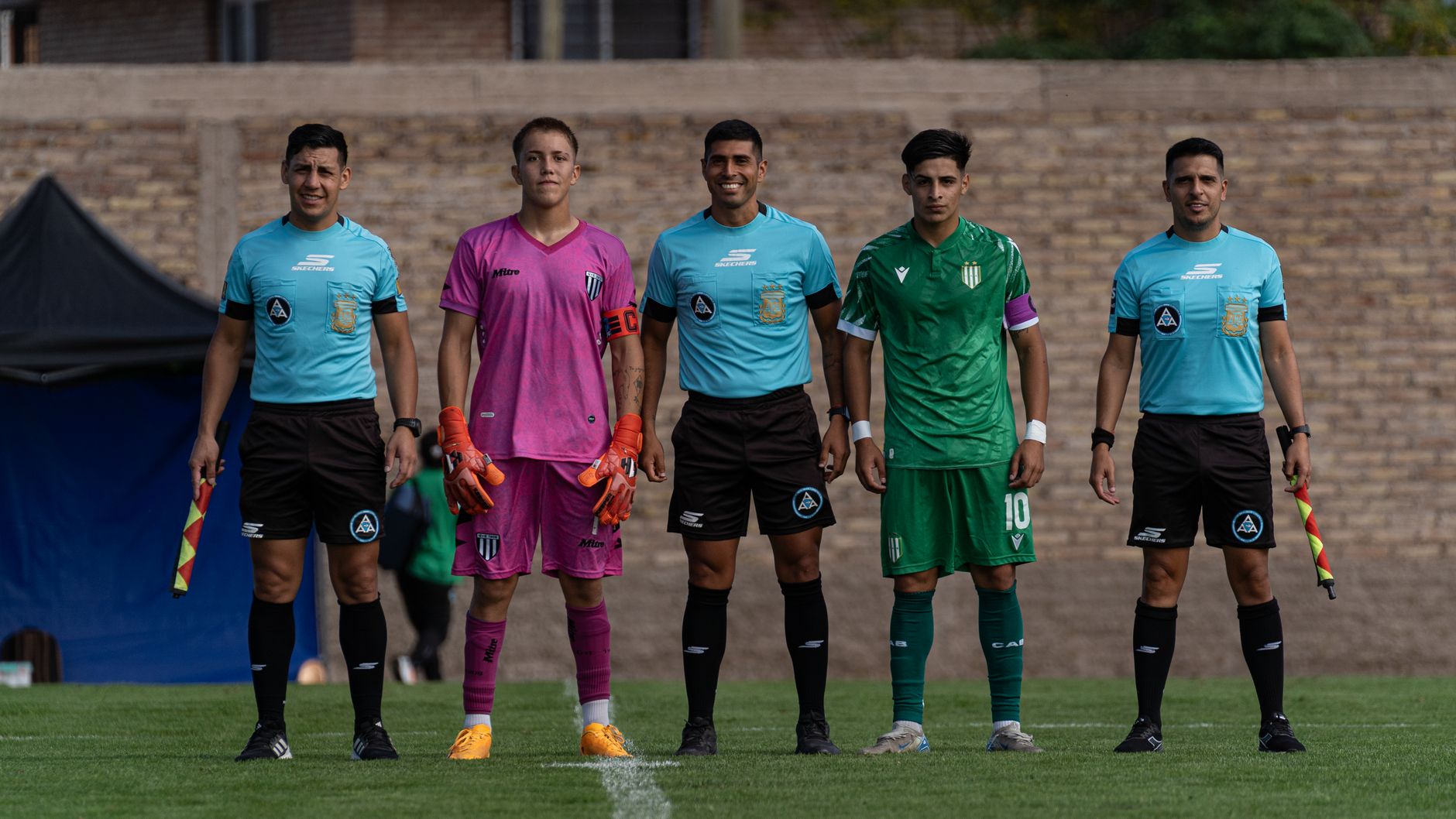
Photo by Franco Monsalvo on Pexels
The strongest FPL managers are not those who predict every goal. They are the ones who consistently buy minutes, protect captaincy, exploit fixture swings, and avoid unnecessary hits. That approach is particularly important for FPL 2026 because World Cup travel, European schedules, and evolving club squads may create more rotation than a normal campaign.
World Cup Hub’s daily tournament analysis can support broader football research, but your FPL decisions should remain evidence-led and independently verified. Build the skeleton early, wait for official prices, and make the final team close to the deadline. That is less exciting than announcing a perfect squad in June, admittedly, but it is considerably less embarrassing in Gameweek 4.
Ready to review the latest football intelligence?
Frequently Asked Questions
Q: What is the best FPL team 2026?
A: The best FPL team 2026 is a flexible squad built around secure starters, premium captaincy options, strong opening fixtures, and verified set-piece roles. No definitive player list can be confirmed until official FPL prices, positions, and fixtures are released. Start with a balanced structure, then finalise names after checking Premier League team news and preseason minutes.
Q: How do you build the best FPL team 2026?
A: Build it by prioritising expected minutes, captaincy routes, fixture quality, and price flexibility in that order. Select reliable starters across all 15 positions, reserve approximately 35–40% of the budget for premium attackers, and retain about £0.5m if the structure allows. Complete a final injury and lineup review within 48 hours of the Gameweek 1 deadline.
Q: What is the difference between a balanced FPL team and a premium-heavy team?
A: A balanced FPL team spreads money across more starting players, while a premium-heavy team concentrates funds in two or three elite attackers. The balanced approach generally offers stronger bench cover and easier fixture rotation; the premium approach can produce a higher captaincy ceiling. Choose premium-heavy only when the expensive players have secure minutes and multiple scoring routes.
Q: Is the best FPL team 2026 free to create?
A: Yes, creating an official Fantasy Premier League team is free. Managers receive a £100.0m starting budget and must select 15 players under the game’s position and club restrictions. Optional paid competitions or external tools may exist, but they are not required to enter standard FPL leagues or compete for overall rank.
Q: Why does my FPL team keep losing points?
A: FPL teams commonly lose points because of rotation risks, weak captaincy choices, unnecessary hits, and transfers based on recent goals rather than expected opportunity. Check starting probability, fixture runs, and role changes before each move. Keep a transfer log so you can identify repeated mistakes instead of blaming one unlucky deflection every week.
Q: When should I use my Wildcard in FPL 2026?
A: Use the Wildcard when several players lose their roles, a major fixture swing begins, or injuries create a structural problem across the squad. Avoid activating it solely because one player is unavailable. In 2026, international breaks, FIFA World Cup workload, and European congestion may create useful Wildcard windows, but the exact timing should follow confirmed fixtures and team news.
Q: How important are World Cup players for FPL 2026?
A: World Cup players may be valuable but carry additional availability and rotation risk after the tournament. Players reaching the later stages in the United States, Canada, and Mexico could receive managed minutes or report late for club preseason. Track tournament progress, recovery updates, club training information, and opening fixtures before selecting several players affected by the same international schedule.
Thank you for reading.
For those who play for more than just the thrill.
World Cup Hub · The High-Stakes Editorial · No. 01