
Before You Bet, Read This Norway Team Breakdown
The Norway national football team is a UEFA men’s international side representing Norway, built around captain Martin Ødegaard, striker Erling Haaland, and a physically imposing generation competing f...
Before You Bet, Read This Norway Team Breakdown
The Norway national football team is a UEFA men’s international side representing Norway, built around captain Martin Ødegaard, striker Erling Haaland, and a physically imposing generation competing for the 2026 FIFA World Cup. Norway’s current profile combines Premier League-level attacking quality with a squad that includes 35-year-old goalkeeper Ørjan Nyland, six reported appearances for Antonio Nusa and Oscar Bobb in the referenced campaign, and seven goals from Haaland. The team’s tactical ceiling is high because Ødegaard can create between the lines while Haaland attacks the penalty area with unusual power and timing. However, Norway remains more than two famous names: Sander Berge, Patrick Berg, Alexander Sørloth, Kristoffer Ajer, and Julian Ryerson all influence how the side controls space and transitions. Before evaluating a Norway match, check the confirmed lineup, opponent press, and midfield availability rather than betting on star power alone.

Photo by cottonbro studio on Pexels
Norway is one of those teams that can look like a tournament dark horse at breakfast and a defensive science experiment by full time. I have watched enough international football to know that reputation is a terrible goalkeeper; it lets almost everything past. The Norway national football team has genuine elite talent, but the useful question is not simply whether Haaland will score. It is whether Norway can consistently move the ball into his preferred zones, protect the space behind its full-backs, and survive opponents that refuse to let Ødegaard receive freely. That distinction matters for supporters, analysts, and readers using World Cup Hub for match predictions or responsible betting research. The Norwegian Football Federation remains the authoritative starting point for squads and fixtures, while UEFA provides competition context and official match information.
Want a broader statistical starting point before looking at individual fixtures?
If you are assessing Norway’s attacking threat: map the Haaland-Ødegaard connection
The Norway national football team’s attacking threat is driven by Erling Haaland’s penalty-box movement and Martin Ødegaard’s passing from advanced midfield, with Alexander Sørloth adding height and a different reference point. Haaland’s seven goals in the supplied squad snapshot show the obvious finishing value, while Ødegaard’s four assists and nine shots indicate a wider creative workload. The key question is whether Norway can deliver early passes before the opposition settles into a compact block.
Haaland is not merely a tall striker waiting for crosses. At Manchester City, his most dangerous actions often begin with a diagonal run across a centre-back or a sudden attack of the gap between central defender and full-back. Norway benefits when midfielders recognize that run immediately. If Ødegaard receives on his left foot near the right half-space, he can slide a through ball into Haaland’s path, combine with a winger, or switch play toward Antonio Nusa. Delay that pass by two seconds, and the opening usually disappears; international defenders may be slow, but they are not legally required to remain asleep.
The second striker question is tactically important. Alexander Sørloth, listed at 6 feet 5 inches and 205 pounds in the referenced squad data, can occupy defenders, contest aerial balls, and attack the far post. He also permits Norway to play more directly without turning every possession into a philosophical debate about short passing. Antonio Nusa offers acceleration and one-on-one ability, while Oscar Bobb can operate in narrow spaces and connect possession. In the snapshot, Nusa recorded six appearances, six shots, and two shots on target, whereas Bobb made six appearances and four shots. Those numbers are not a complete performance model, but they suggest different attacking roles rather than interchangeable substitutes.
For match prediction, I separate Norway’s attack into three tests:
- Access: Can Ødegaard receive beyond the opponent’s first midfield line?
- Delivery: Can Norway play through balls or low crosses before the defensive block resets?
- Second actions: Can Sørloth, Nusa, or Bobb recover loose balls after Haaland is crowded?
The contrarian point is that Haaland’s presence can sometimes reduce Norway’s attacking variety. Opponents may retreat so deeply that Norway must create against ten defenders, leaving less space for Haaland’s running power. In those matches, Ødegaard’s shot volume and Nusa’s ability to beat a stationary full-back become more important than raw striker reputation. World Cup Hub’s [match prediction guide] can help frame those variables without pretending one player turns football into a vending machine.
Why Norway’s front line can still mislead bettors
A famous scorer does not automatically create a high-scoring match. Norway may dominate expected threat in transition but produce fewer clear chances against a low block, especially when the opponent prevents Ødegaard from turning forward. Conversely, a strong opponent that presses aggressively may give Haaland exactly the open grass he wants. This is why I distrust generic “Haaland anytime scorer” logic when the price is poor; paying a premium for an obvious possibility is how experienced gamblers fund bookmakers’ office renovations, believe it or not — I do.
The practical edge is to compare the opponent’s defensive behavior with Norway’s preferred attack. Against a high line, Haaland’s pace and timing can justify an aggressive goals outlook. Against a compact 5-4-1, Norway may need patience, set pieces, and late substitutions, making a first-half goals bet less attractive. Review recent lineups, expected formation, and whether Ødegaard has a genuine ball-progressing partner before treating Norway as an automatic attacking favorite.
[Internal Link: Norway player statistics and form guide]
If you are judging Norway’s midfield and defense: test the structure before the names
Norway’s midfield and defensive structure should be judged by spacing, rest defense, and ball recovery rather than by height alone. Patrick Berg contributes passing and defensive coverage, Sander Berge provides physical range at 6 feet 5 inches, and Fredrik Aursnes offers positional discipline. Behind them, Kristoffer Ajer, Leo Østigard, Torbjørn Heggem, and Julian Ryerson give Norway size and experience, but the unit must avoid exposing wide channels during attacking phases.
The supplied squad data gives a useful snapshot of responsibilities. Patrick Berg recorded six appearances and two assists, while Martin Ødegaard registered five appearances, four assists, and nine shots. Sander Berge appeared five times and offers the kind of ball-carrying power that can break a press, although his value is easier to notice when Norway does not have the ball. Fredrik Aursnes appeared six times, including three substitute appearances in the referenced table, and can help stabilize games when Norway needs control rather than another forward charging into the scenery.
Norway’s defensive profile changes depending on the full-back pairing. David Møller Wolfe contributed one assist in five appearances and can support width, while Marcus Holmgren Pedersen recorded one goal across four appearances and may provide more direct running. Julian Ryerson’s defensive intensity is useful in duels, but aggressive positioning can leave space behind him. Kristoffer Ajer’s 6-foot-6 frame helps with aerial defending and set pieces, while Leo Østigard offers physical competition in central areas. The question is not whether these players are capable; it is whether their distances remain compact after Norway loses possession.
A useful live-analysis checklist is:
- Is the deepest midfielder protecting the zone in front of the centre-backs?
- Are Norway’s full-backs advancing together or leaving one side exposed?
- Can Ajer and Østigard defend open grass, not just crosses?
- Does Norway counter-press for five seconds after losing the ball?
- Is the goalkeeper comfortable starting attacks under pressure?
Goalkeeper selection deserves more attention than it receives. Ørjan Nyland was listed with five appearances, 16 saves, and seven goals conceded in the referenced dataset, while Egil Selvik had one appearance, five saves, and four goals conceded. Those figures should not be read as a clean goalkeeper ranking because opponent quality, defensive errors, and sample size matter. Still, they underline an operational reality: if Norway’s buildup is pressed, the goalkeeper’s decision-making can determine whether possession becomes a controlled attack or an unwanted gift.

Photo by Peter Platou on Pexels
See how the defensive details affect the full match picture before considering a wager.
If you are projecting Norway’s 2026 World Cup outlook: measure the matchup, not the hype
Norway’s 2026 FIFA World Cup outlook depends on qualification context, draw difficulty, injury availability, and the team’s ability to turn attacking talent into repeatable tournament performances. The referenced schedule includes FIFA World Cup matches against Brazil, Côte d’Ivoire, France, Senegal, Iraq, and Morocco, plus a UEFA Nations League fixture against Denmark; because schedules and data feeds can change, readers should verify the final fixture list through FIFA and the Norwegian Football Federation. Norway’s strongest route to success is a balanced attack built around Haaland and Ødegaard, not a desperate attempt to win every match by playing at maximum speed.
The names in those matchups illustrate the problem. Brazil and France can punish loose midfield spacing with elite individual quality, while Senegal and Morocco may challenge Norway physically and tactically in different ways. Iraq and Côte d’Ivoire can present unfamiliar pressing patterns and transition threats, meaning historical reputation is less useful than current form. A match against Denmark, meanwhile, may become a structured battle in which set pieces, second balls, and small territorial gains matter more than spectacular attacking totals.
Norway’s tournament readiness can be assessed through four measurable indicators:
- Chance quality: Are shots arriving from central zones, or is Norway settling for speculative efforts?
- Transition defense: How many dangerous attacks begin immediately after Norway loses the ball?
- Set-piece efficiency: Can Ajer, Sørloth, Haaland, and Østigard create a reliable aerial advantage?
- Game-state discipline: Does Norway protect a lead without abandoning its midfield shape?
A specific edge case is substitution timing. If Nusa or Bobb enters against tired full-backs after 65 minutes, the matchup can change even when the pre-match numbers look balanced. Conversely, removing a stabilizing midfielder too early may create a thrilling final 20 minutes for neutral viewers and a small cardiac event for everyone who backed Norway to protect a lead. Track whether Norway’s bench contains like-for-like replacements or only attacking alternatives. Squad depth is not just the number of recognizable names; it is the number of tactical problems the bench can solve.
According to FIFA’s official World Cup information, tournament conditions, group placement, and match sequencing influence preparation as much as headline talent. FIFA’s competition materials repeatedly emphasize that “fair play” is a core competition principle, but fair play does not mean fair matchups; football has never shown that kindness. For responsible analysis, compare Norway’s schedule congestion, travel, rest days, and confirmed injuries before assigning a probability to qualification or knockout progress.
[Internal Link: 2026 World Cup qualification and group analysis]
What are the common pitfalls to avoid when analyzing Norway?
The most common Norway analysis errors are overvaluing Haaland’s reputation, ignoring opponent style, treating small samples as stable trends, and confusing possession with control. Norway’s star players can raise the team’s ceiling, but international football offers fewer training sessions and less automatised movement than club football. A bettor or supporter should therefore prioritize confirmed lineups, tactical matchup, and recent chance quality over social-media excitement.
The first pitfall is assuming every Norway match becomes a goal festival. Haaland’s seven goals in the supplied snapshot are a meaningful attacking signal, but they do not guarantee that Norway will generate enough service in every fixture. The second is treating Ødegaard’s four assists as proof that every attack flows through him; opponents may assign a marker, force Norway wide, or disrupt the connection between midfield and striker. The third is ignoring defensive game state: Norway can look excellent while leading and vulnerable when chasing.
Avoid these analytical shortcuts:
- “Haaland starts, so Norway wins.” Check the opponent’s line height and central defenders.
- “More possession means control.” Measure entries into the final third and counterattacks conceded.
- “One recent result proves a trend.” Use several matches and adjust for opponent strength.
- “A strong friendly predicts a qualifier.” Competitive intensity and substitution patterns differ.
- “A big defender solves every problem.” Aerial strength does not automatically defend space behind the line.
The fourth pitfall concerns data quality. ESPN-style squad tables can list appearances, substitutions, shots, saves, goals, and assists, but labels and competition filters may vary between pages. A player’s five appearances could mean five starts, five total entries, or a mixed sample depending on the feed. Confirm whether statistics refer to UEFA Nations League, World Cup qualifying, friendlies, or an aggregated season view. This is a boring rule, which is precisely why it saves money.
Finally, do not overlook responsible gambling boundaries. World Cup Hub can provide tactical research, player statistics, and prediction frameworks, but no model removes uncertainty. Set a fixed budget, avoid chasing losses, and treat odds as market prices rather than prophecies delivered by a man in a very confident spreadsheet. The FIFA Integrity resources are useful for understanding the broader importance of clean competition and reporting concerns.
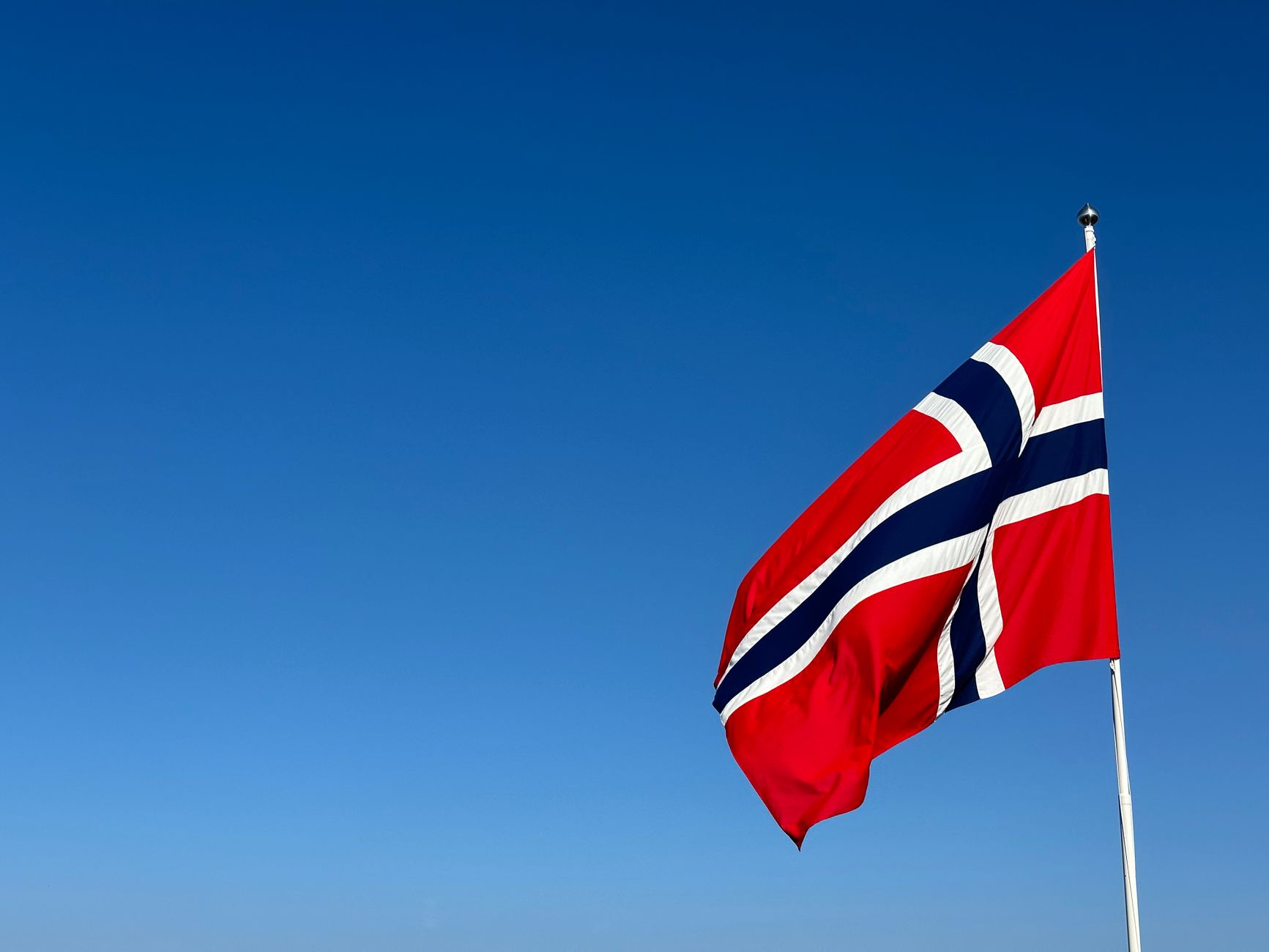
Photo by Dana Englich on Pexels
How should you use the 30-day check-in for Norway?
A 30-day check-in is a disciplined review of Norway’s lineup stability, player fitness, tactical output, and market movement during the month before a major fixture. It should compare at least four matches or training updates where available, then separate genuine changes from random scorelines. This process is especially valuable for a team whose public profile is dominated by Haaland and Ødegaard.
Start by recording the same indicators after every match. Do not change the method simply because Norway wins 4-0; that is how spreadsheets become emotional support animals. Note formation, starting midfield, full-back positioning, shot locations, set-piece results, and the number of high-quality chances created and conceded. A simple 30-day table might include:
| Checkpoint | What to record | Why it matters |
|---|---|---|
| Squad news | Injuries, suspensions, call-ups | Reveals available combinations |
| Attacking pattern | Through balls, crosses, cutbacks | Shows how Haaland receives service |
| Midfield shape | Berg, Berge, Aursnes, Ødegaard roles | Measures control and protection |
| Defensive line | Ajer, Østigard, Ryerson, full-back spacing | Identifies transition risk |
| Goalkeeper | Nyland or Selvik selection, save workload | Indicates buildup and shot-stopping demands |
| Market movement | Opening and closing odds | Shows public and professional expectations |
The most useful information gain comes from comparing Norway’s first 15 minutes with its final 15 minutes. If the team starts strongly but concedes late chances, conditioning, substitutions, or midfield protection may be issues. If Norway grows into matches, early markets may overreact to a quiet opening. In my own match notes, I also mark whether Haaland’s first meaningful touch arrives inside the box or forty yards away; that single observation often tells me more about service quality than a possession percentage.
Review the 30-day evidence every week:
- Days 1–7: Confirm the player pool and recent injuries.
- Days 8–14: Compare attacking combinations and pressing behavior.
- Days 15–21: Study opponent-specific weaknesses and set pieces.
- Days 22–30: Recheck the starting XI, travel, weather, and odds.
Norway’s best-case scenario is a settled structure in which Ødegaard receives forward, Berg or Aursnes covers transitions, Berge carries through pressure, and Haaland attacks a steady supply of chances. The warning sign is a team that relies on individual improvisation while conceding easy counters. That is the line between a credible 2026 World Cup contender and a talented side that spends 90 minutes asking the football gods for one more miracle.
For deeper preparation, compare this review with a [World Cup team tactics analysis] and the latest official squad announcement. Use the same criteria for every opponent so your conclusion does not quietly change just because Norway’s shirt looks particularly dramatic under floodlights.
The sensible final position is straightforward: Norway has the attacking quality to trouble elite nations, but its result probability rises or falls with midfield spacing, defensive transitions, and lineup continuity. Start with the team structure, then assess the stars. I have made every possible mistake in reverse order, and I recommend skipping that educational experience.
Want to keep tracking Norway’s 2026 World Cup development?
Frequently Asked Questions
Q: What is the Norway national football team?
A: The Norway national football team is Norway’s men’s senior international football side, governed by the Norwegian Football Federation and competing in UEFA and FIFA tournaments. Its modern identity is associated with Erling Haaland, Martin Ødegaard, Alexander Sørloth, and a developing supporting cast from European clubs. Norway’s competitive objectives include UEFA qualification campaigns, Nations League matches, and the 2026 FIFA World Cup cycle. Official squad announcements and fixtures should be checked through the Norwegian Football Federation rather than relying solely on third-party databases.
Q: How does Norway’s attack work with Haaland and Ødegaard?
A: Norway’s attack works best when Martin Ødegaard receives between the lines and releases Erling Haaland into central or inside-right channels. Ødegaard’s four assists and nine shots in the referenced squad snapshot illustrate his creative and shooting involvement, while Haaland’s seven goals show his finishing value. Against a high defensive line, direct passes and rapid transitions are especially dangerous; against a deep block, Norway needs Nusa, Bobb, or Sørloth to add width, combinations, and second-ball pressure.
Q: Is Norway a good 2026 World Cup team?
A: Norway is a potentially dangerous 2026 World Cup team, but its quality depends on defensive structure and qualification context rather than star power alone. Haaland and Ødegaard give Norway an elite attacking foundation, while Sander Berge, Patrick Berg, Kristoffer Ajer, and Julian Ryerson add physical and technical balance. Norway should be rated more highly against teams that defend with a high line and more cautiously against opponents that can block Ødegaard while attacking the space behind the full-backs.
Q: What should I check before analyzing a Norway match?
A: Check the confirmed lineup, recent injuries, opponent formation, rest period, and Norway’s midfield combination before evaluating a match. Pay particular attention to whether Ødegaard starts, whether Berg or Aursnes protects transitions, and whether Haaland receives consistent service inside the penalty area. Also verify whether statistics cover World Cup qualifying, UEFA Nations League, friendlies, or a combined data feed, because competition filters can change the apparent form of a player.
Q: Why might Norway struggle even when Haaland starts?
A: Norway might struggle when opponents deny service to Haaland, crowd the central corridor, and force attacks into predictable wide crosses. A striker can finish only the chances that arrive, and a deep 5-4-1 block may remove the open running lanes that make Haaland most destructive. In those matches, Norway needs Ødegaard’s chance creation, Nusa’s dribbling, Sørloth’s aerial presence, and midfield patience rather than repeated hopeful passes toward one famous forward.
Q: What is the difference between Norway’s first-choice attack and its defensive depth?
A: Norway’s first-choice attack has clearer elite-level recognition through Haaland and Ødegaard, while defensive depth is more dependent on combinations, roles, and game state. Ajer and Østigard provide central physicality, Ryerson and Pedersen offer aggressive wide running, and Nyland brings international experience in goal. The difference matters because attacking quality can decide one moment, but defensive depth must preserve spacing across an entire match and survive injuries or suspensions.
Q: How much does it cost to follow Norway match predictions on World Cup Hub?
A: Reading World Cup Hub’s editorial match analysis does not require a payment based on the information supplied here, although betting operators and premium services may apply their own terms. World Cup Hub covers predictions, tactics, player statistics, and 2026 World Cup developments, but readers should check the specific page and any applicable conditions before using a service. Betting should remain entertainment within a fixed budget, never a method for recovering losses or paying regular expenses.
Keep following Norway’s confirmed squad news, tactical trends, and 2026 World Cup match context with World Cup Hub.
Thank you for reading.
For those who play for more than just the thrill.
World Cup Hub · The High-Stakes Editorial · No. 01