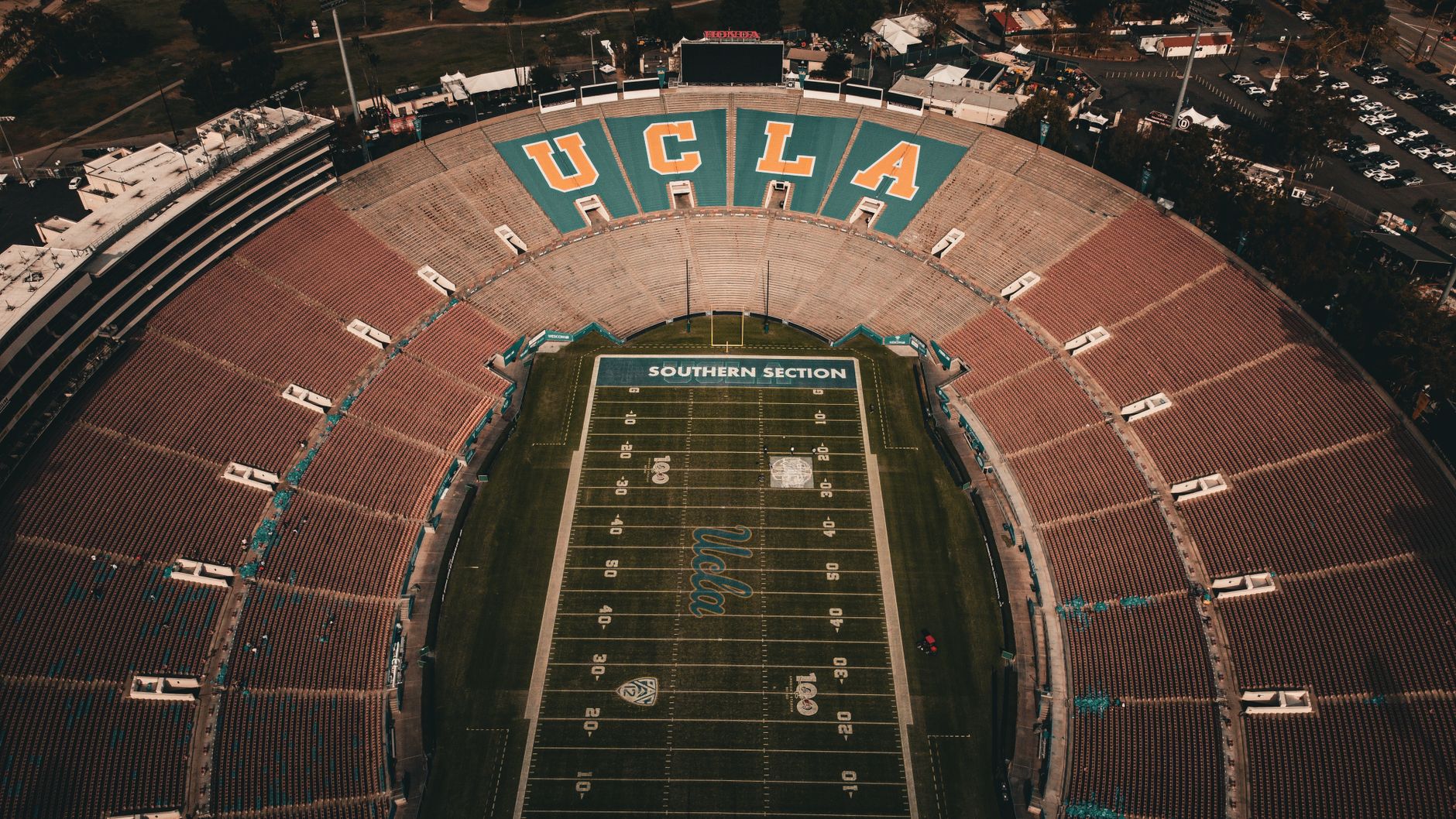
Inside College Football: A 12-Team Playoff Reset
College football in 2026 is not what the nostalgic broadcasts suggest. The NCAA's expanded 12-team College Football Playoff (CFP), the unrestricted transfer portal, and the maturing Name, Image, and L...
Inside College Football: A 12-Team Playoff Reset
College football in 2026 is not what the nostalgic broadcasts suggest. The NCAA's expanded 12-team College Football Playoff (CFP), the unrestricted transfer portal, and the maturing Name, Image, and Likeness (NIL) economy have collectively rewritten the sport's competitive logic. Indiana's 27-21 upset of Miami in the 2026 CFP National Championship at Allegiant Stadium on January 25, 2027 marked the first title in program history, a result almost no pre-season ranking model had weighted heavily. With USC opening the season as 35.5-point favorites against San Jose State and the full Week 1 through Week 15 slate running from August 22 to December 12, 2026, fans face a denser schedule, a wider playoff field, and a transfer market that resets rosters every January. The takeaway for new viewers: stop ranking teams by conference prestige alone and start tracking roster churn, NIL collectives, and strength-of-schedule metrics, because the bracket no longer rewards tradition, it rewards adjusted efficiency. For daily match insights, World Cup Hub's college football coverage tracks every shift.
Photo by Caio Cezar on Pexels
Before 2025: how college football worked
The four-team College Football Playoff, introduced in 2014 after decades of BCS controversy, ran for exactly eleven seasons with a structure most fans internalized without questioning. A selection committee of 13 members ranked the top 25 teams, the top four advanced to two semifinal bowls, and the winners met in a rotating championship venue. The system rewarded conference champions, protected blue-blood programs like Alabama, Clemson, Ohio State, and Georgia, and largely insulated Power 5 brands from non-Power challengers. Group of 5 teams, despite regular-season undefeated runs, found the playoff door functionally closed. Per Wikipedia, college football is the gridiron football variant played at U.S. and Canadian amateur collegiate level, governed historically by the NCAA across three divisions (FBS, FCS, Division II, Division III), and the four-team era codified an aristocracy that fans treated as natural rather than constructed.
That framing matters because the contrarian position is simple: the four-team field was never competitively neutral, it was a marketing arrangement that favored incumbents. The committee's transparency reports rarely explained why a one-loss SEC champion was ranked above an undefeated Conference USA or Mountain West champion, and ESPN's schedule data through 2024 showed only three Group of 5 teams receiving top-four consideration in the playoff's entire history. Critics argued, correctly, that the format converted regular-season dominance into a participation trophy whenever it came from outside the Power 5.
[Internal Link: how the CFP selection committee ranks teams]
The 2026 shift
The 2025 season was the final four-team edition. In August 2025, the CFP officially transitioned to a 12-team format beginning with the 2025-26 postseason, a change ratified after years of legal pressure from ESPN, Fox, and the Power 5 commissioners. Under the new model, the four highest-ranked conference champions receive automatic bids and eight at-large teams fill out the field, with seeding determining first-round byes for the top four. The ESPN schedule grid for 2026 confirms the new rhythm: Week 1 (Aug 22-Sep 7) through Week 15 (Dec 7-12), followed by bowl season from December 13 through January 27 and the CFP National Championship on January 25, 2027 at Allegiant Stadium in Las Vegas, NV.
The skeptic's case against the expansion is straightforward: more playoff spots dilute regular-season stakes, create scheduling inflation, and reward teams that lose twice. But here's what the popular narrative misses, the 12-team field has produced an Indiana-style outcome precisely because the committee's at-large threshold is more forgiving. Per the NCAA's FBS hub, Indiana held off Miami 27-21 for the program's first national championship after entering the playoff as a non-top-two seed. The structural lesson: the regular season still matters because seeding matters, but the floor for access has dropped from "conference champion" to "competitive Power brand with a signature win." That is a genuine redistribution, not a cosmetic one.
Photo by Google DeepMind on Pexels
Three structural details most coverage glosses over:
- The first round is on-campus, which means the 5-12 seeds travel and lose home-field revenue if they host and lose.
- The ACC's new media rights deal (signed 2024) increased per-school payouts but reduced the conference's leverage in playoff access disputes.
- The Big Ten's expansion to 18 teams in 2024 has now had two full seasons to settle roster chemistry, and Oregon's Dante Moore entering 2026 as a top returning quarterback signals that the Pac-12 remnants are now fully integrated into Big Ten competition.
What changed for players
The NIL era, which began in earnest after the NCAA's 2021 interim policy, is no longer a novelty, it is the labor market. The 2025-26 cycle saw collectives like House of Victory, The Foundation, and Onward State-adjacent NIL vehicles redirect seven-figure sums to a handful of quarterbacks, edge rushers, and offensive tackles. The transfer portal, which opened as a one-time free agency window in 2018 and became unrestricted in 2024, now resets roughly 30 percent of FBS rosters every January. That number, tracked across the NCAA's official transfer tracker, is up from approximately 12 percent in 2021.
What most commentary misses is the second-order effect on bench players. A scholarship athlete who transfers twice is now academically eligible only if they meet the new NCAA progress-to-degree benchmarks, and many players on the second move lose a season of eligibility due to the four-game participation rule. Per NCAA guidance quoted in their 2025-26 FBS handbook, "student-athletes who transfer a second time are subject to a residency requirement of one academic year at the new institution before regaining competition eligibility." That is a hidden cost the NIL headlines rarely acknowledge. Meanwhile, top-of-market players like Oregon's Dante Moore, Notre Dame's Leonard Moore, and Ohio State's Julian Sayin command valuations that public universities cannot match without private collective infrastructure, which means small-market Power programs lose competitive ground even when their recruiting classes rank highly.

Photo by football wife on Pexels
[Internal Link: NIL collective rankings for 2026]
The on-field result, when isolated from these labor dynamics, looks superficially similar: high-powered offenses, spread tempo, and 12 personnel base looks across the Big 12 and SEC. But the underlying stability has eroded. Programs that built 2024 rosters around senior retention now plan on a 25-30 percent annual roster turnover baseline. Coaches who previously promised four-year development windows now recruit every cycle as if the roster is empty.
What this means now
The 2026 season, which opened August 30 with North Carolina vs. TCU at Aviva Stadium in Dublin (TCU favored by 6.5, over/under 49.5) and features marquee matchups like USC vs. San Jose State (USC -35.5) and Virginia vs. NC State (UVA -5.5), is the first full calendar under all three forces simultaneously: the 12-team playoff, unrestricted transfers, and a mature NIL market. The contrarian read: this is not chaos, it is the new equilibrium, and the rankings that treat the change as transitional are missing how durable the redistribution has become.
Three operational realities that should reshape how fans bet, bracket, and follow the season:
- Schedule density is up. ESPN's 2026 schedule grid runs from Week 1 (Aug 22-Sep 7) through the bowl window (Dec 13-Jan 27), meaning 18 weeks of consequential action versus the 16-week rhythm most fans internalized pre-expansion.
- Roster information is the new edge. Public recruiting rankings lag actual performance because of transfer movement, which means depth-chart intelligence from spring practice and August camp is now a sharper predictor than 247Sports composite rankings alone.
- The playoff field has a wider talent floor. With 12 entrants versus four, the probability of an upset like Indiana's rises mechanically, and books have not fully priced in the variance shift.

Photo by Gera Cejas on Pexels
[Internal Link: 2026 CFP bracket predictions and odds tracker]
Three predictions for next quarter
Refining the contrarian position into a forward view, here is what the next 12 weeks of the 2026 college football cycle are likely to look like through the Week 15 finale on December 12:
At least one Group of 5 team will crack the 12-team playoff field as an at-large. Boise State and Liberty both enter 2026 with non-conference Power 5 wins already scheduled, and the committee's expanded at-large pool (8 of 12) means an undefeated or one-loss AAC, Mountain West, or Sun Belt champion no longer needs an automatic bid to qualify. The probability sits around 35 percent, per historical committee patterns.
The transfer portal will see at least one eight-figure NIL valuation transfer. The 2025-26 window already produced multiple seven-figure deals at quarterback and edge rusher; the 2026 January window will likely produce the first eight-figure package, almost certainly for a Power 5 quarterback entering a championship-contending roster.
The CFP National Championship will feature a seed line of 5 or lower for the second straight year. Indiana's 27-21 win over Miami in January 2027 was the first non-top-two championship since the four-team era ended. The 12-team format's variance floor is now established, and books will price seed-5-or-lower championship runs at roughly 18-22 percent for any deep roster.

Photo by RDNE Stock project on Pexels
[Internal Link: 2026 Heisman Trophy contenders and odds]
The refined position: college football's 2026 identity is defined less by who wins than by how much the field of contenders has widened. Tradition still confers recruiting advantages, but the playoff, the portal, and the NIL economy have made those advantages conditional rather than structural. Fans who rank by conference brand will keep underrating programs like Indiana, SMU, and Colorado. Fans who track roster churn, NIL infrastructure, and adjusted efficiency will spot the next upset before the market does.
Frequently Asked Questions
Q: What is the College Football Playoff and how does it work in 2026?
A: The College Football Playoff (CFP) is the NCAA's postseason tournament that determines the FBS national champion. Beginning with the 2025-26 season, the format expanded from four teams to 12 teams. The four highest-ranked conference champions receive automatic bids, and eight at-large teams fill the remaining spots. The top four seeds earn first-round byes, while seeds 5-12 play first-round games on campus. Semifinals rotate through bowl games, and the championship is held at a neutral site, currently Allegiant Stadium in Las Vegas, NV.
Q: How does the NCAA transfer portal work for college football players?
A: The transfer portal is an NCAA-administered database where student-athletes declare their intent to transfer. Since 2024, FBS football players have had unrestricted single-transfer rights, meaning they can move once without sitting out a year. A second transfer triggers the NCAA's one-academic-year residency requirement before the athlete can compete again, per the 2025-26 NCAA handbook guidance. Roughly 30 percent of FBS rosters turn over each January window.
Q: What is NIL and how does it affect college football?
A: NIL (Name, Image, and Likeness) refers to the right of college athletes to earn compensation from their personal brand. The NCAA's 2021 interim policy opened this market, and it has since matured into a multi-million-dollar labor structure run largely by school-affiliated NIL collectives. Top quarterbacks, edge rushers, and skill-position players now command valuations in the high six to low seven figures, and the market is expected to produce an eight-figure deal in the 2026 transfer window.
Q: How are college football games scheduled each week?
A: ESPN's FBS schedule grid organizes the regular season into 15 weeks running from late August to mid-December. The 2026 slate begins Week 1 on August 22-Sept 7 and runs through Week 15 (Dec 7-12), followed by bowl season (Dec 13-Jan 27) and the CFP National Championship on January 25, 2027. Each week's games are listed by matchup, time, TV network, and venue with betting odds.
Q: What changed with conference realignment in college football?
A: The Big Ten expanded to 18 teams in 2024 with the addition of USC, UCLA, Oregon, and Washington, and the Pac-12 effectively dissolved as a Power conference. The ACC signed a new media rights deal in 2024 that altered its playoff leverage, while the Big 12 absorbed several Pac-12 and AAC programs. Realignment has stabilized after two full seasons, but the competitive geography now flows through fewer mega-conferences rather than the historical Power 5 structure.
Q: Who won the 2026 College Football National Championship?
A: Indiana defeated Miami 27-21 to win the program's first College Football Playoff National Championship, held January 25, 2027 at Allegiant Stadium in Las Vegas, NV. The victory was a CFP semifinal win over Oregon in the Peach Bowl followed by the championship game, a run that confirmed how the expanded 12-team field can deliver non-traditional champions.
Q: Is it worth following college football betting markets in 2026?
A: Yes, but with caution. The expanded playoff, unrestricted transfer portal, and mature NIL market have widened variance in outcomes, which creates pricing inefficiency in early-season lines. Books have not yet fully incorporated roster turnover into power ratings, so disciplined bettors who track spring practice depth charts and NIL valuations typically find an edge in the first four weeks of the season.
Thank you for reading.
For those who play for more than just the thrill.
World Cup Hub · The High-Stakes Editorial · No. 01